Logistics & transportation
SMS and WhatsApp delivery alerts for both ends of the shipment.
Logistics, courier and transport businesses use UDO to send dispatch alerts, live delivery status, OTP-verified proof of delivery and instructions to drivers, over SMS, WhatsApp, RCS and outbound voice. Each status change in your transport system fires the message itself, so neither the recipient nor the driver has to call to ask.
98%+ delivery · DLT-registered transactional routes · Trusted by 1,000+ Businesses Worldwide
Shipment lifecycle
Five status changes, five delivery alerts nobody has to chase.
Each one fires from a status update your transport or courier system already records.
Picked up
Pickup confirmed to the sender, with the tracking number.
In transit
Dispatch alert to the recipient, tracking as a button, and the expected date.
Out for delivery
The driver's name and a contact option, sent as the vehicle leaves the hub.
At the door
A one-time code the recipient gives the driver to confirm handover.
Delivered
Confirmation with the time, and proof of delivery for the sender.
At the doorstep
The two moments that decide a delivery's cost.
The handover, and the attempt that fails. Both cost less to resolve when the message arrives before the question does.
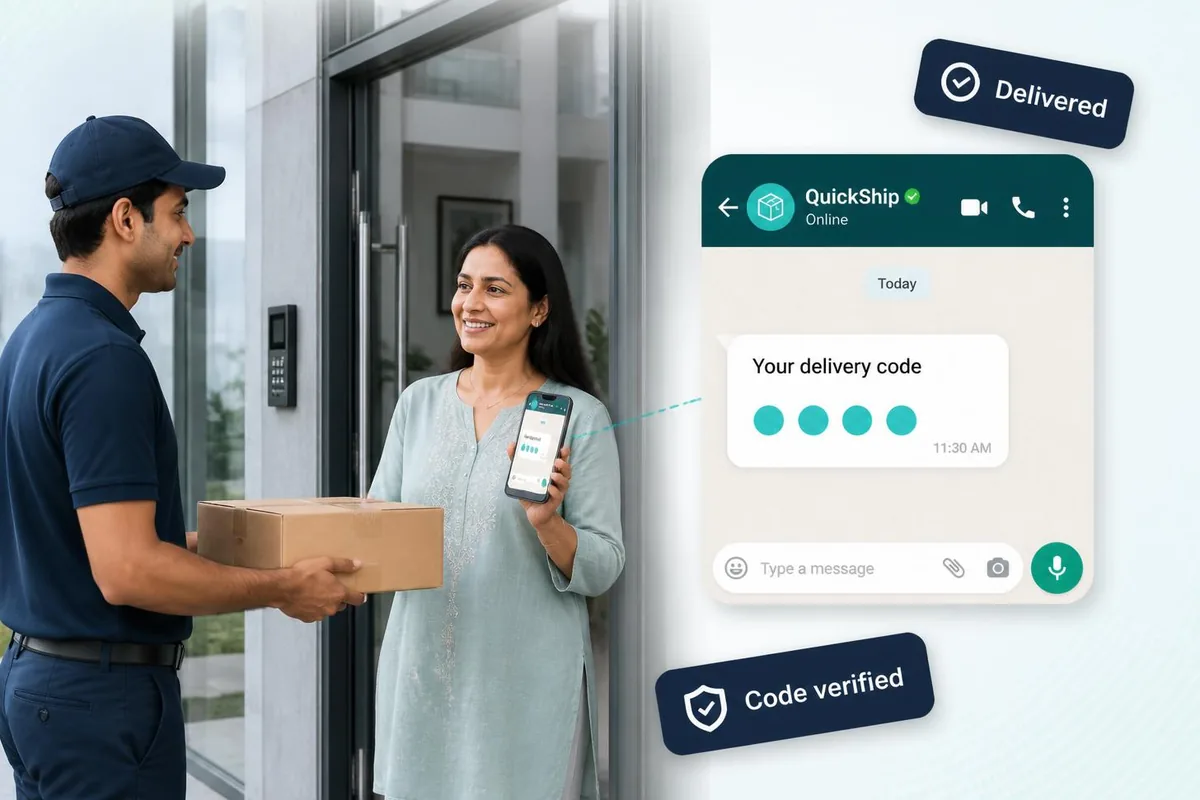
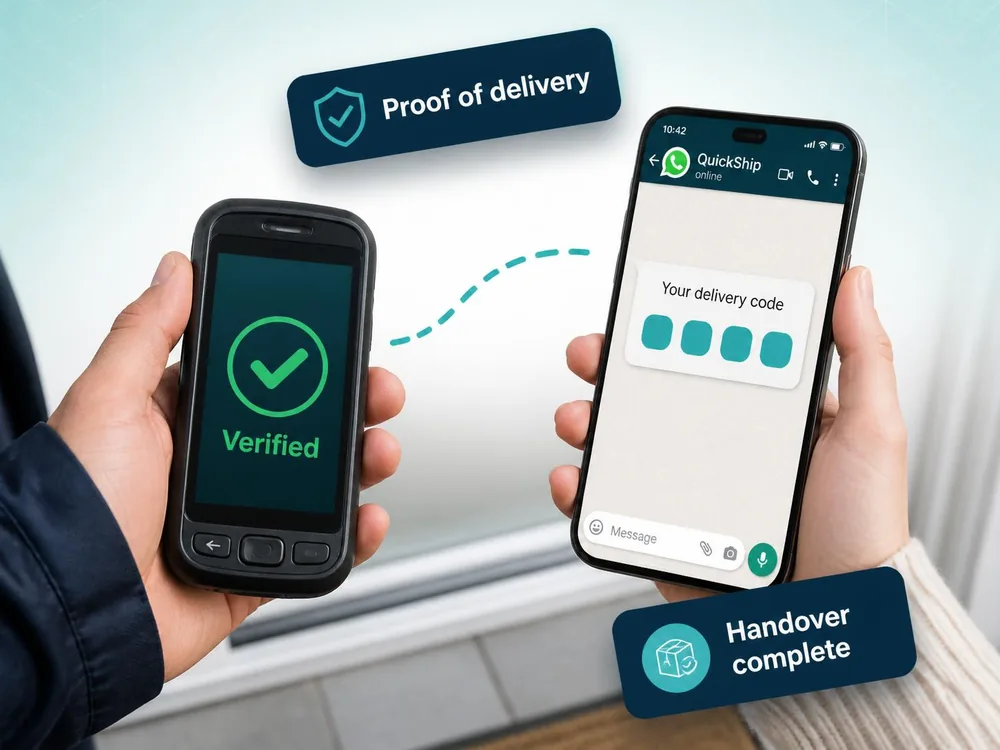
OTP proof of delivery
A code the recipient reads out to the driver turns "I never got it" from a dispute into a lookup. UDO sends the OTP on a transactional route when the parcel goes out for delivery, your driver app checks it through the API, and the verified handover becomes your proof of delivery.
- OTP on SMS, with a WhatsApp copy for recipients who prefer it
- An automated voice call reads the code aloud if the SMS does not arrive
- Verification against your own shipment record
- Every send and delivery timestamped for disputes
Exceptions, said before the customer asks
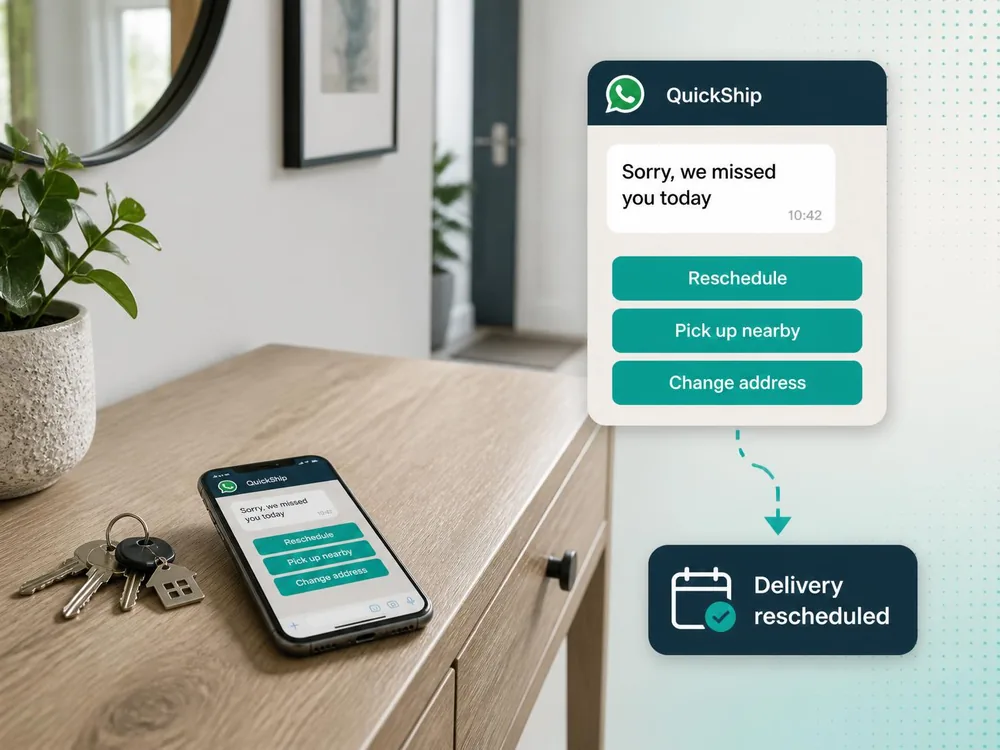
A failed attempt, a weather delay or a wrong address costs a second trip when nobody is told. The exception message goes out with a choice, to reschedule, correct the address or pick a collection point where you offer one, answered with a tap on WhatsApp and returned to your system by webhook.
- Failed-attempt notice with reschedule buttons
- Delay alerts carrying a revised date
- Address correction before the second attempt
- Automated voice call for cash-on-delivery recipients who have not confirmed
Driver communication
How should you message drivers on the road?
Message drivers before the route starts and at their stops, never mid-drive: using a handheld phone while driving is an offence under Section 184 of the Motor Vehicles Act, as amended in 2019.
Before the shift
The day's run sheet summary, the first pickup, the vehicle number and any special handling, on WhatsApp or SMS before the engine starts.
- Drivers on basic phones get it as SMS
- Regional-script SMS fits 70 characters, not 160, so it stays brief
- Fleet-wide notices sent to every driver at once
At the stop
A gate code, a "leave with security" note or a changed drop point arrives as one short instruction the driver reads while parked.
- One instruction per message, readable at a glance
- A location pin for any changed drop point
- Logged against the run, so dispatch can see it arrived
For developers
Your status feed is the trigger.
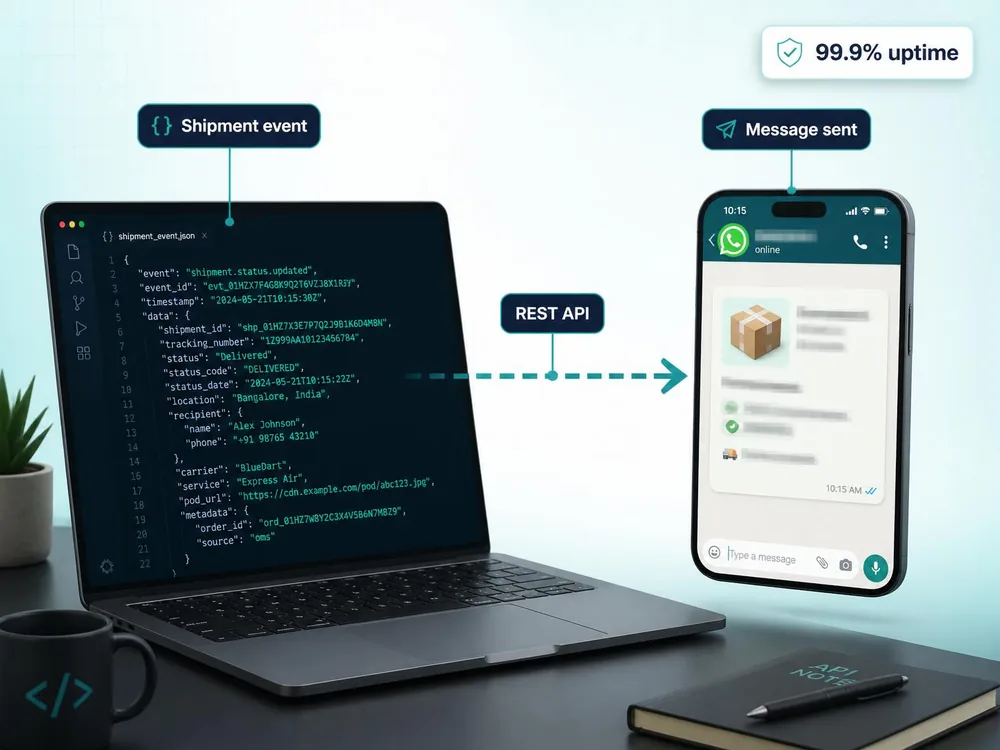
Nobody in operations types a delivery message. The shipment event does it.
One API call per status change
Your TMS, WMS or courier platform posts the shipment event to UDO's REST API with the recipient and the status. UDO sends the matching template on the right channel and reports delivered, read or failed back by webhook.
- REST API with delivery webhooks
- Channel fallback: WhatsApp or RCS first, SMS beneath
- Templates registered on DLT for each status
- Tracking-link domains whitelisted on DLT, since an SMS carrying an unlisted link is blocked
- Delivery reports per message, in the dashboard and by webhook
Questions
Frequently asked.
It is a one-time code sent to the recipient when the parcel goes out for delivery, which they give to the driver at handover.
The driver app checks the code, and the verified handover becomes proof that the right person received the parcel.
Send the time-critical ones, out for delivery and the delivery OTP, by SMS, because it reaches every handset without data. Send the rich ones, tracking buttons, photos and reschedule options, on WhatsApp or RCS.
The delivery OTP can go on both. WhatsApp alerts need the recipient's opt-in to hear from you on WhatsApp; a service SMS on a DLT-registered template does not.
Yes. Delivery alerts are service messages under TRAI's DLT rules, and on a DLT-registered header and template they reach DND-registered numbers at any hour.
Keep offers out of them, or the whole message is treated as promotional.
UDO can place an automated voice call that reads the code aloud, and your driver app can request a resend through the API.
Every attempt is logged with its delivery status, which gives you a record if the delivery is disputed later.
Yes. Any system that can post a shipment event to a REST endpoint can drive UDO, and delivery results come back to it by webhook.
Where customer records live in a CRM, UDO works with Salesforce, HubSpot, Zoho and Freshdesk.
Shipment messages are billed per delivery, so an alert that never reaches the recipient costs nothing.
The rate depends on channel and category, with no account opening fee or subscription; shippers with steady daily volume get custom rates. Check the rate card.
Start with the delivery attempt that fails most.
Run delivery OTPs or out-for-delivery alerts on one route or city as a small paid pilot. We register the templates and connect your status feed; you compare failed attempts and "where is my parcel" calls against before.