RCS vs SMS
RCS vs traditional SMS: which should you send?
SMS reaches every phone; RCS adds a verified brand name, images, buttons and read receipts in the same messaging app. Send SMS when reach decides the message and RCS when the customer has to see or do something. With SMS fallback set up, you never have to pick one channel for your whole list.
By the Unique Digital Outreach team · Updated
Start here
What is the difference between RCS and SMS?
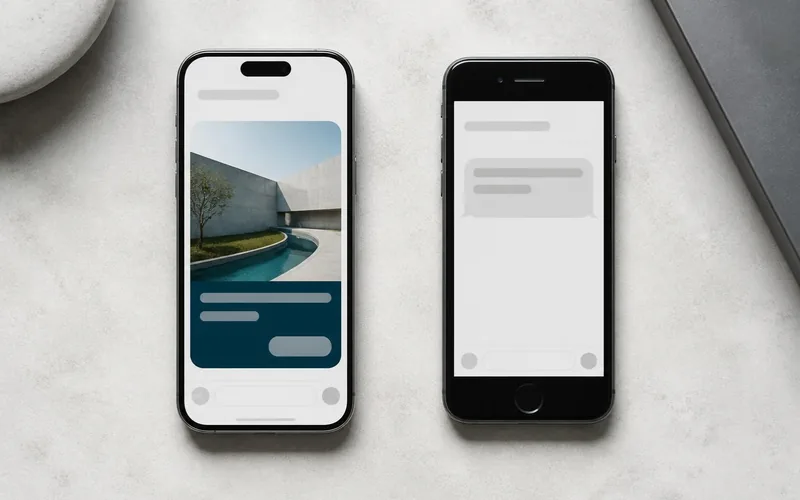
SMS is plain text from a short sender header, and it reaches every mobile phone on every network; RCS arrives in the same messaging app but carries your verified brand name and logo, images, carousels, buttons and read receipts, on phones that support it. Where a phone does not, a sender with SMS fallback set up sends the same message as an SMS instead.
Send as SMS
OTPs and login codes
Arrival matters more than looks. If you send codes over RCS, keep SMS fallback switched on for every one.
Send as SMS
Alerts that must land without data
SMS travels over the mobile network itself, so it arrives with mobile data switched off.
Send as RCS
Order and delivery updates
A verified name, a track button, and a read receipt that tells you the customer saw it.
Send as RCS
Offers and launches
A carousel lets the customer browse the range without leaving the messaging app.
Send as RCS
Support and replies
Suggested replies and a two-way thread move the customer along without a phone call.
Use both
Most other messages
RCS where the phone supports it, SMS underneath where it does not, from a single send.
The difference
What actually changes when a message moves from SMS to RCS?
Three things change in ways that affect results rather than looks: the customer can see who sent the message, can act on it without leaving the thread, and you can see whether it was read.
The three changes that matter
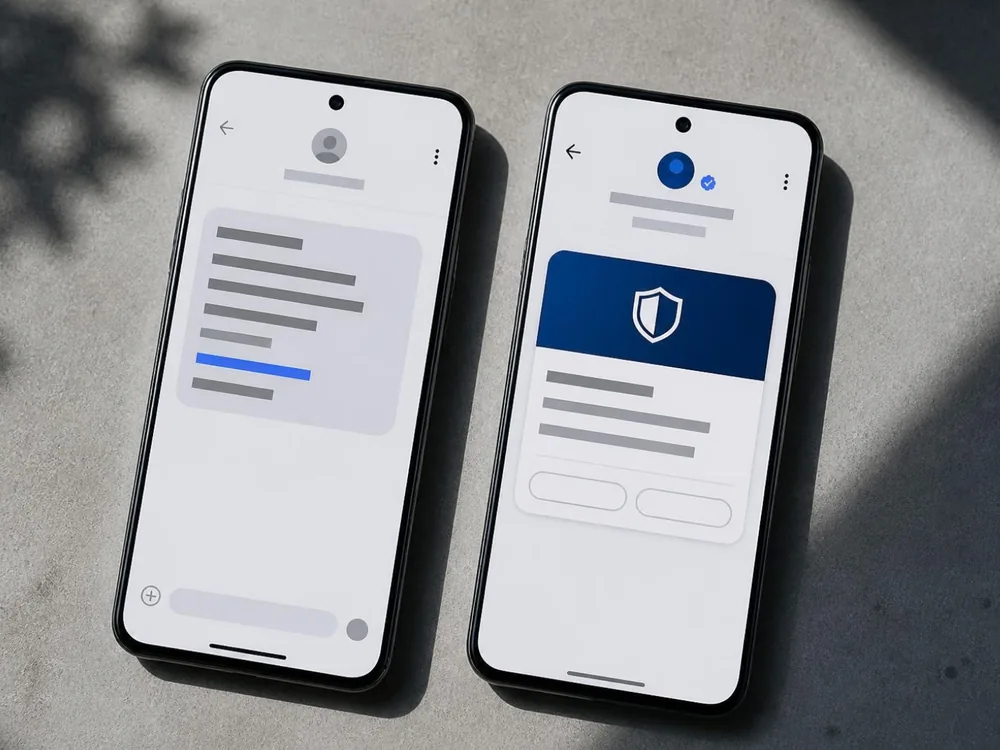
- The sender becomes identifiable. SMS shows a short alphanumeric header. RCS shows your registered brand name, logo and a verified badge, which is what sets a genuine payment or delivery message apart from a phishing text.
- The message becomes actionable. SMS can carry a link. RCS carries buttons, carousels and suggested replies, so the customer books, pays or tracks inside the thread instead of being handed to a browser.
- The result becomes measurable. SMS returns a delivery report. RCS adds read receipts and the buttons that were tapped, so you see what was opened and acted on, not only what the network accepted.
Everything else on a feature list follows from these three. If a message needs none of them, it makes a good SMS.
Side by side
How do RCS and SMS compare, feature by feature?
RCS does more than SMS on every row but one: SMS reaches every phone, with or without a data connection, which is why it stays underneath RCS as the fallback.
The phones row decides most rollouts. With SMS fallback set up, moving to RCS costs you no reach: anything that cannot be delivered as RCS still arrives as a text. For the standard itself, see what RCS is and how it works.
Reach
Does choosing RCS mean losing reach?
No, as long as SMS fallback is set up: a message that cannot be delivered as RCS goes out as an SMS instead, so every number on the list still receives it.
You send once
One campaign or API call carries the RCS card and a text version of it.
The phone is checked
The platform works out whether that number can receive RCS.
RCS where it can
The card arrives with your verified name, images and buttons.
SMS where it cannot
The text version goes out on your DLT-registered header and template.
One report
Read receipts and taps from RCS, beside delivery reports from SMS.
Fallback rules matter more than coverage figures. A promotional fallback is a promotional SMS, so it reaches non-DND numbers only, between 10 AM and 9 PM by default; a transactional fallback reaches DND numbers at any hour. Both travel on DLT-registered headers and templates.
Decide
When does each channel win?
SMS wins when reach and cost decide the message; RCS wins when the customer has to see something or do something. These are the cases where the choice is clear.
Send it as SMS
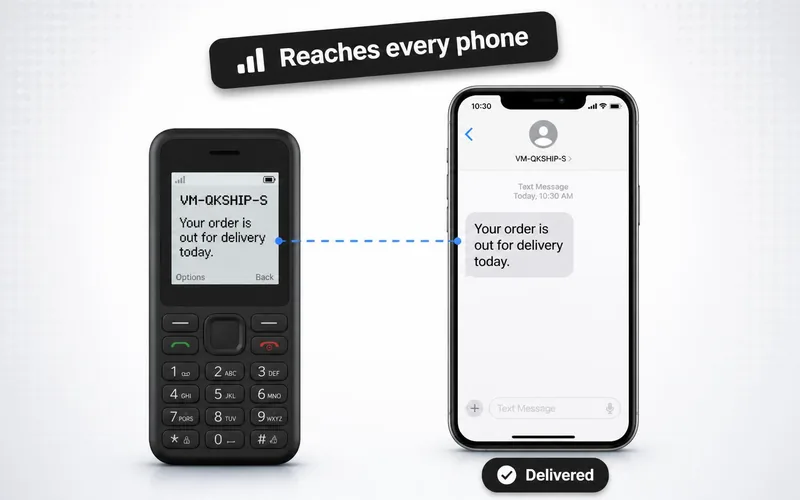
When arrival matters more than appearance.
- One-time passwords and login codes
- Alerts that must arrive with no data connection
- Messages that are genuinely one line of text
- Lists that include keypad phones and older handsets
- High-volume sends where the per-message difference adds up
Send it as RCS
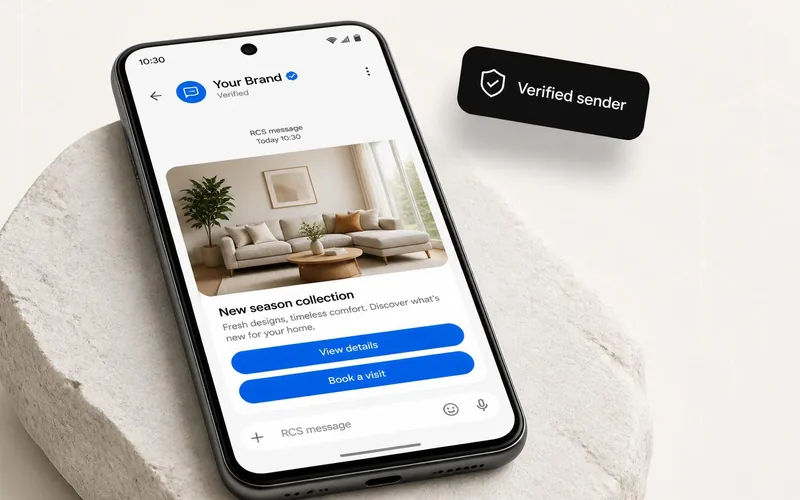
When the customer has to see or do something.
- Offers and launches, where the image does the selling
- Product discovery, where a carousel replaces a landing page
- Order and delivery updates, where a verified name builds trust
- Payment reminders, where the verified sender sets you apart from phishing
- Support and qualification, where the customer replies
Sending one-time passwords over RCS without SMS fallback. A code that does not arrive is a failed login, and the customer blames your product rather than their phone, so make fallback compulsory on anything time-critical. More on OTP delivery.
Cost
Does RCS cost more than SMS?
Yes: an RCS message costs more to send than an SMS, and a promotional RCS message costs more than a utility one. Both channels are billed per delivered message, with no setup or subscription fee.
SMS
One rate per delivered message, whether promotional, transactional or OTP. The smaller of the two per-message charges.
Utility RCS
Order, delivery, booking and account updates. A small step up from SMS that adds the verified sender, read receipts and buttons to messages customers already expect.
Promotional RCS
Offers and launches. The larger step: worth it when a carousel replaces a landing page, hard to justify for one line of text and a link.
Judge the difference against what the message replaces, not against the SMS rate alone. The current rates for both channels and every message type are on the rate card.
Questions
Frequently asked.
For messages that need a verified sender, images, buttons or read receipts, yes. For reach, no: SMS still arrives on every mobile phone, including keypad phones and phones with no data connection. That is why most businesses send RCS where it is supported and keep SMS underneath it as the fallback.
Not in practice. RCS is built as an upgrade to SMS and relies on it as the fallback, so businesses run both rather than switching one off. SMS remains the channel that reaches every handset without a data connection.
Yes. Per message, RCS costs more than SMS, and a promotional RCS message costs more than a utility one. Both are charged per delivered message with no setup or subscription fee, and the current rates are on our pricing page.
If SMS fallback is set up, the message goes out as an SMS instead, without the images, buttons or read receipt. A promotional fallback is a promotional SMS, so it reaches non-DND numbers only, between 10 AM and 9 PM by default; a transactional one reaches DND numbers at any hour.
Around 95% of Android handsets in India can, through Google Messages, and so can iPhones running iOS 18 or later where the carrier supports RCS. Every other phone receives the message as an SMS, when fallback is set up.
Yes, and the verified sender shows the customer where the code came from, but only with SMS fallback switched on. A code that does not arrive is a failed login, so for one-time passwords the fallback should be compulsory.
Much longer: an RCS message carries long text in one message, alongside images and buttons, while a single SMS holds 160 characters, or 70 in Hindi, Tamil and other scripts that need Unicode. Anything longer goes as an SMS in several parts.
You need it for the SMS fallback: that message is an ordinary SMS, so it travels on a DLT-registered header and approved template. The RCS side needs a Google-verified brand and an approved sender, and we work through both registrations with you.
No. Move the messages that gain from a verified sender, images, buttons or read receipts, and leave one-line texts on SMS, where they cost less and still arrive everywhere.
See both channels on your own messages.
Bring a real campaign and a real notification. We will show you each one as an SMS and as an RCS card in your branding, with the fallback set up underneath.