Retail
The sale ends at the till. Retail text marketing starts there.
Retail text message marketing with UDO turns the phone number taken at billing into a reason to come back: e-bills and loyalty balances after each purchase, store offers and footfall campaigns for shoppers near each outlet, and order-ready alerts for click-and-collect, across WhatsApp, RCS, SMS and voice. It is built for businesses with a physical door, from a single store to a national chain.
600M+ messages delivered · Opt-in captured at the counter · Trusted by 1,000+ businesses worldwide
At the counter
Take the number with consent, then use it well.
Most stores already ask for a phone number at billing. What is usually missing is permission to message, and a reason the shopper wants to hear from you.
From till to thread
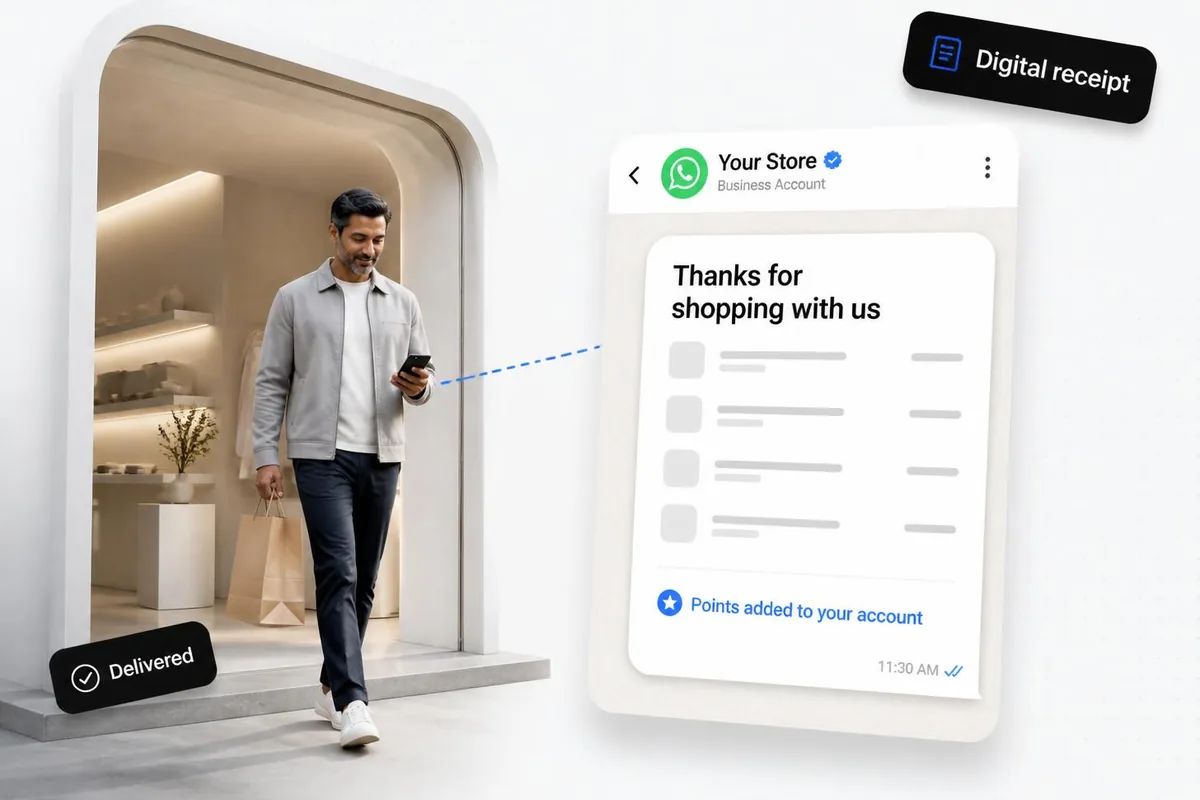
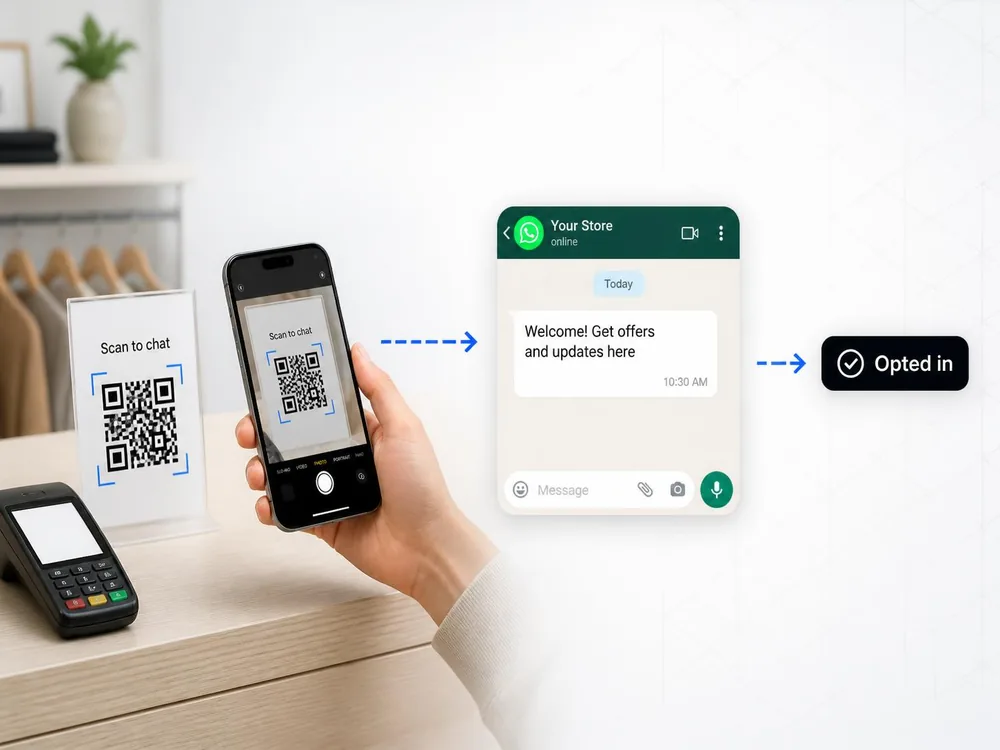
Send the e-bill on WhatsApp or SMS the moment the sale closes; on WhatsApp, that needs the shopper's yes at the till. Keep offers out of the bill: a message that mixes in a promotion counts as promotional on SMS and as a marketing template on WhatsApp. Ask for permission to send offers on its own, at billing or on the loyalty form, and let a QR code at the counter open a chat for people who did not buy today.
- E-bills and the returns policy delivered on WhatsApp or SMS
- Opt-in to offers asked for separately from the bill, and recorded with the date and outlet
- A counter QR code that opens a chat with your business
- Each contact tagged to the outlet they bought from
Four jobs
What retail text marketing sends, and why the shopper opens it.
Store offers
Season sales, new arrivals and member previews for opted-in shoppers, segmented by what each one bought.
Loyalty
Points earned on each visit, balances before they expire, and tier upgrades worth announcing.
Footfall campaigns
Store launches, in-store events and weekend sales for shoppers near each outlet, with directions inside the message.
Order-ready alerts
Click-and-collect, alterations, special orders and repairs: a message the moment it is ready, with the collection desk and opening hours.
Footfall and collection
Messages that end at your door.
Footfall campaigns by store catchment
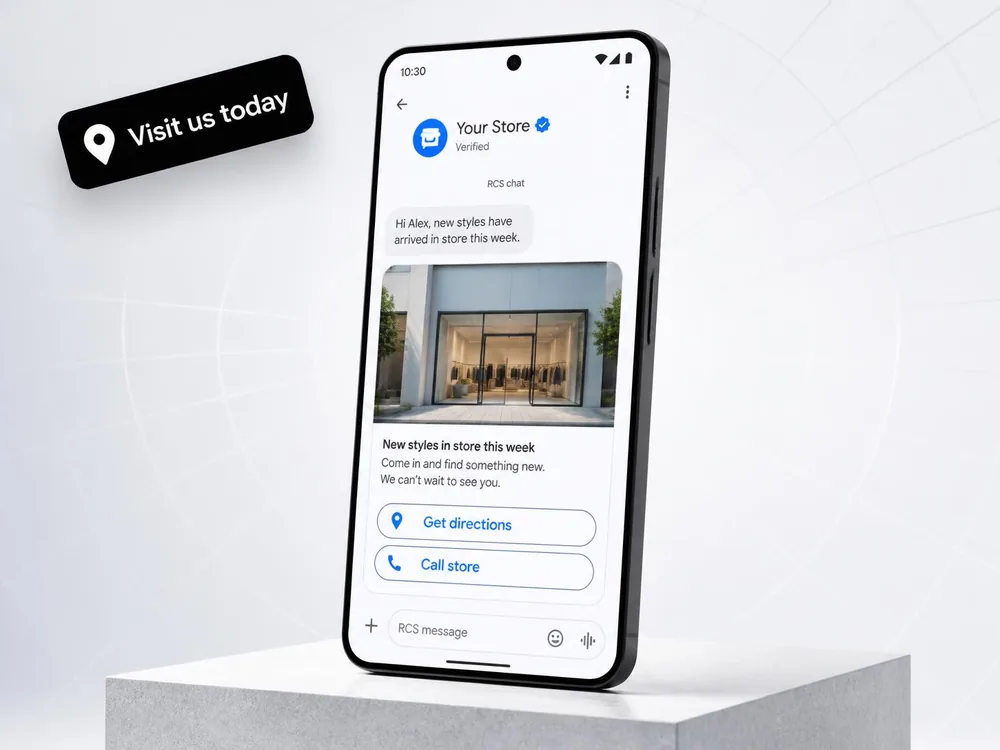
A Saturday sale matters to the shoppers who live near that outlet, not to the whole list. Segment by the store a shopper last bought from, or by pin code, and send each group its nearest outlet: on RCS with a store photo and a Get directions button, or on WhatsApp with a location pin.
- Store launches and reopenings after a refit
- In-store events with a one-tap RSVP
- End-of-season sales for customers who bought that category
- Promotional SMS scheduled inside the 10 AM – 9 PM window
Order-ready alerts that bring them in today
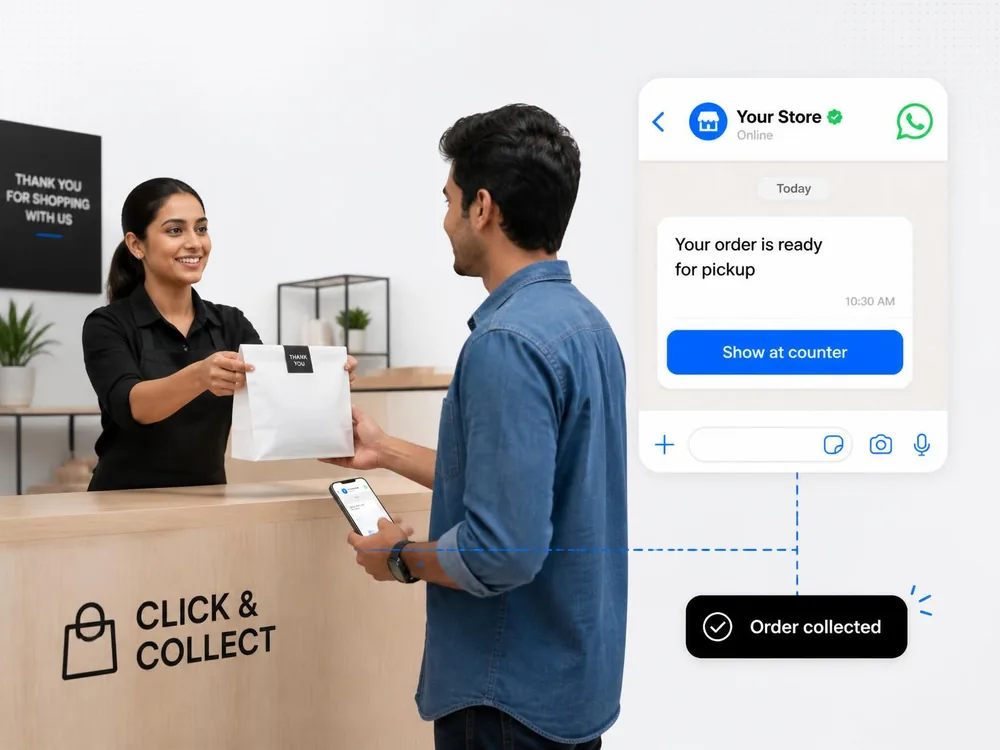
A click-and-collect order, a finished alteration, a special order that has arrived: the message that says ready is the one that brings a shopper to the store. It goes out from your POS or order system with the collection desk, opening hours and an order reference to show at the counter.
- Triggered through the REST API by your POS or order system
- Sent as a service SMS, which reaches DND-registered numbers at any hour
- A follow-up if the order has not been collected
- An automated outbound voice call if the order is still waiting after the reminder
- A pick-up confirmation once it is handed over
Loyalty
A loyalty programme nobody can see is a discount nobody uses.
Points sitting in a POS database do nothing. A balance in the shopper's inbox, before it expires, gives them a reason to visit.
The balance on every bill
Points earned and the new total arrive with the e-bill, so the programme is visible after every purchase.
Expiry before it happens
A reminder ahead of points lapsing, naming the nearest store and what the balance can be spent on.
Tiers that feel like a promotion
Upgrade messages with the new member benefits, sent to the shopper who earned them rather than to the whole base.
Consent
A number taken at billing is not consent for everything.
On SMS, the number on a bill lets you send the bill. On WhatsApp, even the bill needs the shopper's opt-in first, and offers on any channel need a separate yes.
E-bills, order-ready and collection alerts confirm something the shopper did. On SMS, an e-bill sent within 30 minutes of the sale is a transactional message; order-ready and collection alerts, and any bill that carries a loyalty balance, are service messages. Both go from DLT-registered headers and templates and reach DND-registered numbers at any hour.
Offers, sales and launches are promotional. On SMS they reach non-DND numbers only, between 10 AM and 9 PM by default, and every message carries an opt-out; on WhatsApp they need the shopper's opt-in.
India's Digital Personal Data Protection Act, 2023 requires consent to be specific to its purpose (section 6); under the 2025 Rules, its consent duties take effect on 13 May 2027. Ask for marketing permission separately from the bill, and keep a record of it. How promotional messaging works.
Sources: TRAI, TCCCPR 2018 (PDF, 5.7 MB), Schedule-II time bands, and its Second Amendment, 2025 (PDF, 1.8 MB), on message types and consent; Meta, WhatsApp Business Messaging Policy, on opt-in; Digital Personal Data Protection Act, 2023, section 6, and the Digital Personal Data Protection Rules, 2025 (PDF, 2.4 MB). Last verified .
Questions
Frequently asked.
Retail stores use WhatsApp to send e-bills and loyalty balances after a purchase, offers and new arrivals to opted-in shoppers, store-event invitations with a location pin, and order-ready alerts for click-and-collect.
Shoppers can reply in the same thread to ask about stock or opening hours, and your staff answer from a shared inbox on the WhatsApp Business API.
Retail stores use SMS for messages that must reach any phone: the e-bill at the till, order-ready and collection alerts, and offers to shoppers who have not blocked promotional messages. Offers go from a DLT-registered promotional header between 10 AM and 9 PM by default and carry an opt-out.
A regional-language offer in Unicode fits 70 characters per SMS, against 160 in English. See how bulk SMS marketing campaigns are built.
Not without their explicit consent. Promotional SMS reaches non-DND numbers only, and by default only between 10 AM and 9 PM, even if the person shopped with you last week. The exception is a shopper who has given you explicit digital consent, recorded on DLT: TRAI's 2025 amendment lets your promotional messages through whatever their DND preferences.
Messages that confirm a purchase or an order, such as the e-bill or a ready-for-collection alert, are transactional or service messages and can reach DND numbers at any hour.
Ask at the moment of value, separately from the bill: a question at billing, a QR code at the counter that opens a chat where one tap opts in, or a line on the loyalty sign-up form.
Store each opt-in with the date and the outlet. It is your evidence of consent, and it tells you which store the shopper belongs to.
Yes. Tag each contact with the outlet they bought from or their pin code, and each campaign goes only to people within reach of that store.
A chain can then run a different offer at every outlet from one dashboard, rather than one national message that suits nobody in particular.
Yes, through the REST API: your POS, loyalty or order system triggers e-bills, points updates and order-ready alerts as each event happens.
Customer records in Salesforce, HubSpot or Zoho, and engagement data in CleverTap or MoEngage, can drive your segments as well. The API documentation lists the endpoints and delivery webhooks, and CRM integrations covers the connectors.
Not every shopper, but most Android ones: RCS reaches about 95% of Android handsets in India through Google Messages, and Apple has supported RCS since iOS 18.
Anyone whose phone cannot display the card receives the offer as an SMS instead, under the same rules as any promotional SMS.
Give every shopper a reason to come back through the door.
Try e-bills and loyalty balances in a handful of stores as a small paid pilot. We design the opt-in flow with your team during the demo. Billing is per delivered message; rates are on the pricing page.