Insurance
Insurance renewals are won before the due date.
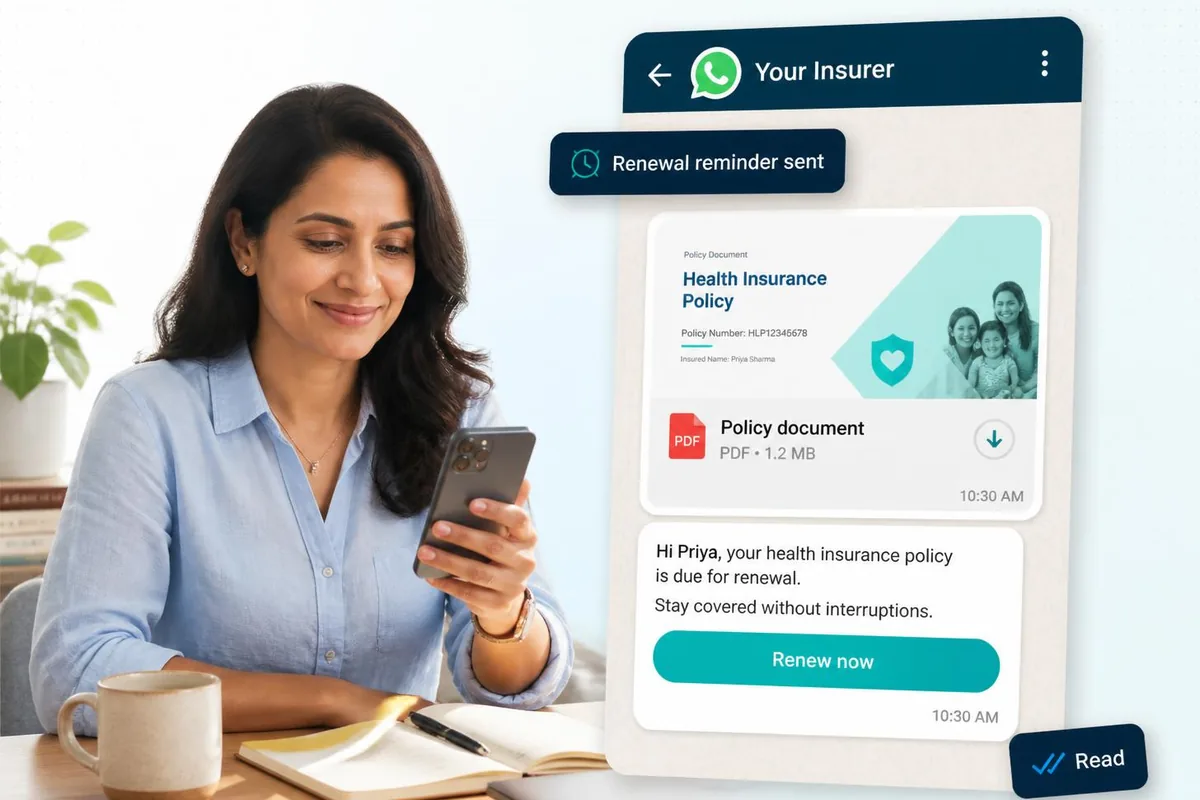
Insurers, brokers and agents use UDO to send insurance renewal reminders by SMS and WhatsApp before a policy lapses, remind policyholders before a premium falls due, deliver policy documents at issuance and keep claimants updated at every stage, with RCS and voice on the same layer. Each WhatsApp, RCS and SMS message carries your registered sender identity, which helps a policyholder tell it apart from the fraud that imitates insurers.
Official Meta Tech Provider · DLT-registered routes · Trusted by 1,000+ businesses worldwide
The policy lifecycle
The messages a policy needs, from proposal to renewal.
Each is a moment when the policyholder either trusts you more or starts looking elsewhere.
| Moment | Message | Channel |
|---|---|---|
| Proposal | e-KYC and proposal-signing codes | SMS, with a voice call as fallback |
| Issuance | Welcome, the policy document as a PDF, free-look period notice | WhatsApp, with an SMS link as backup |
| Premium due | What is due and by when, with a link to pay; grace-period reminders after | WhatsApp and SMS, voice for older policyholders |
| Claim intimated | Acknowledgement, claim number and the documents needed | |
| Claim in progress | Surveyor visit, cashless authorisation, queries raised | WhatsApp and SMS |
| Settlement | Amount approved and payment credited | SMS and WhatsApp |
| Renewal | Renewal notice, revised premium and a renew link | WhatsApp, RCS and SMS |
Renewal reminders
How should an insurance renewal reminder SMS be sent?
Send it as a service message from a DLT-registered header and template, to the number on the policy, before the renewal date and again through the grace period. It concerns a policy the person already holds, so it reaches DND-registered numbers at any hour, and the network adds -S to the header so the policyholder can see it is a service message, not a promotion.
What the SMS carries
- The policy number, partly masked
- The renewal date and the premium due
- A link to renew and pay, on a URL whitelisted for your sender
- No health or claim details in the message body
What changes the route, script or channel
- A top-up or a different policy in the same message makes it promotional: non-DND numbers only, between 10 AM and 9 PM by default
- Hindi or another regional script fits 70 characters per SMS, against 160 in English
- On WhatsApp the same reminder goes as a template, to policyholders who opted in
- A recorded outbound call reaches those who miss both
Sources: TRAI, the 2025 amendment to the commercial communications regulations and the 2018 regulations it amends.
Claims and premiums
The two moments policyholders remember.
Claim status without the phone call
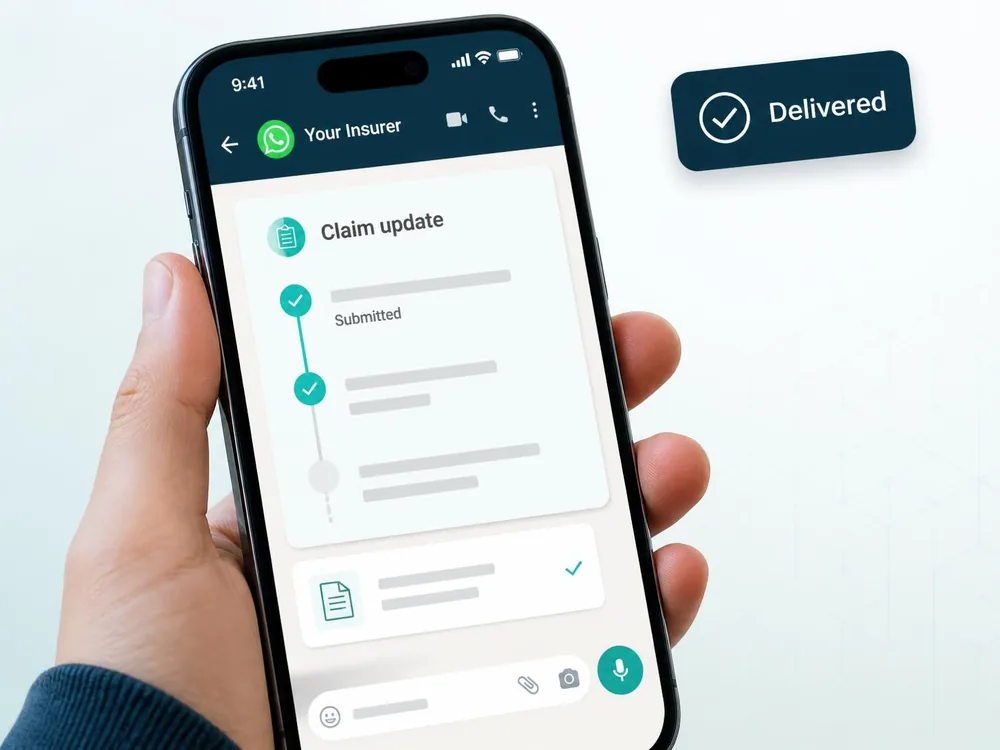
A claimant checking on progress is already anxious, and every wait on a helpline adds to it. Updates sent as the claim moves, from registered to documents received, surveyor assigned, approved and paid, answer the question before it is asked.
- Cashless authorisation updates for a family waiting at the hospital desk
- Missing documents requested, and received, in the same WhatsApp thread
- Surveyor visit slots confirmed for motor claims
- A settlement message once the amount is credited
Premium and renewal reminders that reach every policyholder
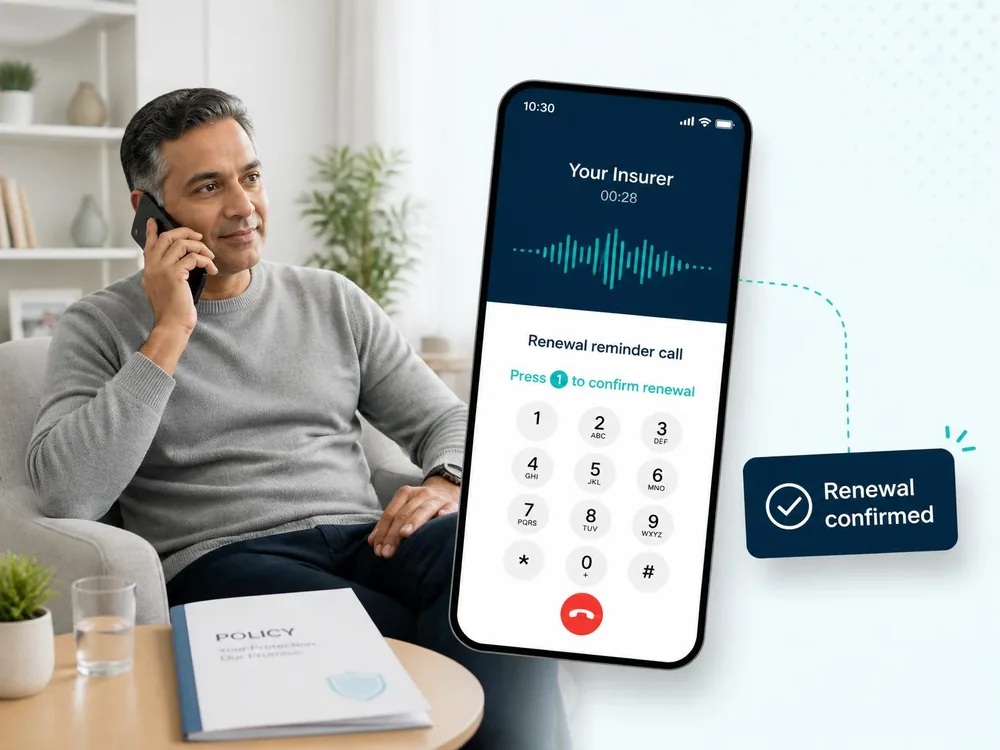
A life policy can run for decades, and the policyholder's habits change several times in that span. Send the reminder on WhatsApp with a payment link, back it with a service SMS that reaches DND-registered numbers, and add a recorded call in the policyholder's language for those who respond to a voice.
- Reminders scheduled ahead of the due date and through the grace period
- A receipt as soon as the payment clears
- Recorded calls in regional languages, with unanswered numbers retried
- Delivery reports against each policy number, kept for your records
Regulatory context
Insurance messages answer to IRDAI as well as TRAI.
Two regulators touch every message. This is the general picture; your compliance team decides the specifics.
IRDAI regulates how insurers and intermediaries sell and service policies. A message that promotes a policy counts as an insurance advertisement, and responsibility for its wording stays with the insurer or intermediary that sends it. UDO carries the message; your compliance team approves the words.
TRAI decides the route. Premium reminders, claim updates and policy documents for existing policyholders are service messages and reach DND-registered numbers at any hour. A campaign for a new product is promotional and reaches non-DND numbers only, between 10 AM and 9 PM by default. Both need DLT-registered headers and templates.
Personal data, health details above all, belongs behind a link the policyholder has to sign in to, not in the message body. The Digital Personal Data Protection Act, 2023 covers the policyholder data you message from; the DPDP Rules, 2025, notified on 14 November 2025, bring its duties into force in phases over 18 months.
Sources: IRDAI (Protection of Policyholders' Interests, Operations and Allied Matters of Insurers) Regulations, 2024 and IRDAI's Master Circular on Operations and Allied Matters of Insurers (19 June 2024); TRAI's commercial communications regulations, 2018 and their 2025 amendment; the Government's note on the DPDP Rules, 2025.
By line of business
Life, health and motor do not sound the same.
Life
Premium continuity over many years, nominee and address updates, and maturity or survival-benefit intimations that tell the policyholder what to expect.
Health
Cashless and reimbursement claim updates, network-hospital details, and renewals where a break in cover can cost the policyholder their continuity benefits.
Motor
Renewal before the policy lapses, claim intimation and surveyor scheduling. Dealers who sell motor cover will find their side under messaging for automotive dealers.
Questions
Frequently asked.
Insurance companies use WhatsApp to deliver policy documents, send premium reminders with a payment link, update claimants and collect missing documents, and run renewal campaigns to opted-in policyholders.
Policy and claim updates go as utility templates, and messages promoting a new product go as marketing templates. WhatsApp requires the policyholder's opt-in before a business sends either.
Yes. A premium reminder for a policy someone already holds is a service message, so it goes from a DLT-registered -S header and reaches DND-registered numbers at any hour.
A cross-sell for a different policy is promotional, which limits it to non-DND numbers between 10 AM and 9 PM by default. See how service and transactional SMS reach DND numbers.
The insurer or intermediary sending the message is responsible for its content under IRDAI's rules; UDO's part is delivering it on the correct DLT-registered route.
In practice your compliance team approves each template's wording, we register it, and the route follows from the template's category.
Yes. A claimant can send photos and PDFs in the same WhatsApp thread as their claim updates, and your team receives them in the shared inbox with the conversation attached.
Ask only for what the claim needs, and move sensitive records to your own secure upload wherever your process requires it.
Yes. Whenever a policy or claim changes status, your policy administration, claims or CRM system calls the REST API and the matching message goes out.
If your servicing team works in Salesforce, HubSpot, Zoho or Freshdesk, or engagement data sits in CleverTap or MoEngage, those CRM integrations are supported as well. The API documentation lists the endpoints and status webhooks.
Send from one consistent, registered identity on every channel: a DLT-registered SMS header, a verified WhatsApp business profile and a Google-verified RCS sender showing your name and logo.
Tell policyholders which senders you use, and never ask for a password or a full card number in a message.
Keep more policies in force, one reminder at a time.
Premium reminders on one product line make a contained, small paid pilot. In the demo we list the templates your compliance team will need to approve.