RCS for e-commerce
RCS for e-commerce: carts, COD and reorders that bring shoppers back.
RCS lets an online store send the cart a shopper left behind, photographed, with a button that reopens it, inside the phone's own messaging app and under the store's verified name. UDO sends COD confirmation and delivery updates from your transactional agent and cart and reorder prompts from your promotional agent, both under your verified store name, so the customer you paid to acquire comes back. Google does not offer multi-use agents in India, so the two run side by side.
Product carousels · COD confirmation by tap · SMS fallback with whitelisted links
Mapped to the order
Which e-commerce messages should run on RCS?
The messages that end in a tap belong on RCS: back-in-stock alerts, cart reminders, cash-on-delivery confirmation, delivery updates, refunds and reorders. A plain receipt can stay plain.
| Moment | What the card shows | Buttons | SMS fallback category |
|---|---|---|---|
| Back in stock | The product the shopper asked about, photographed | Buy now · Not now | Promotional |
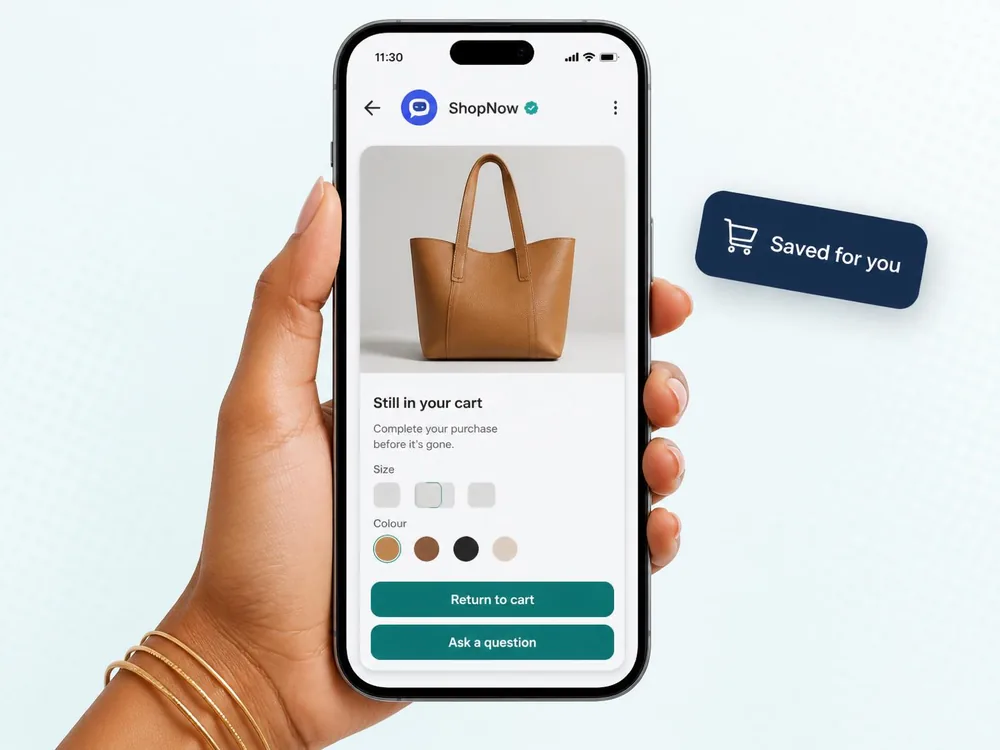
| Cart left behind | The items, size and colour they chose | Return to cart · Ask a question | Service, with explicit consent |
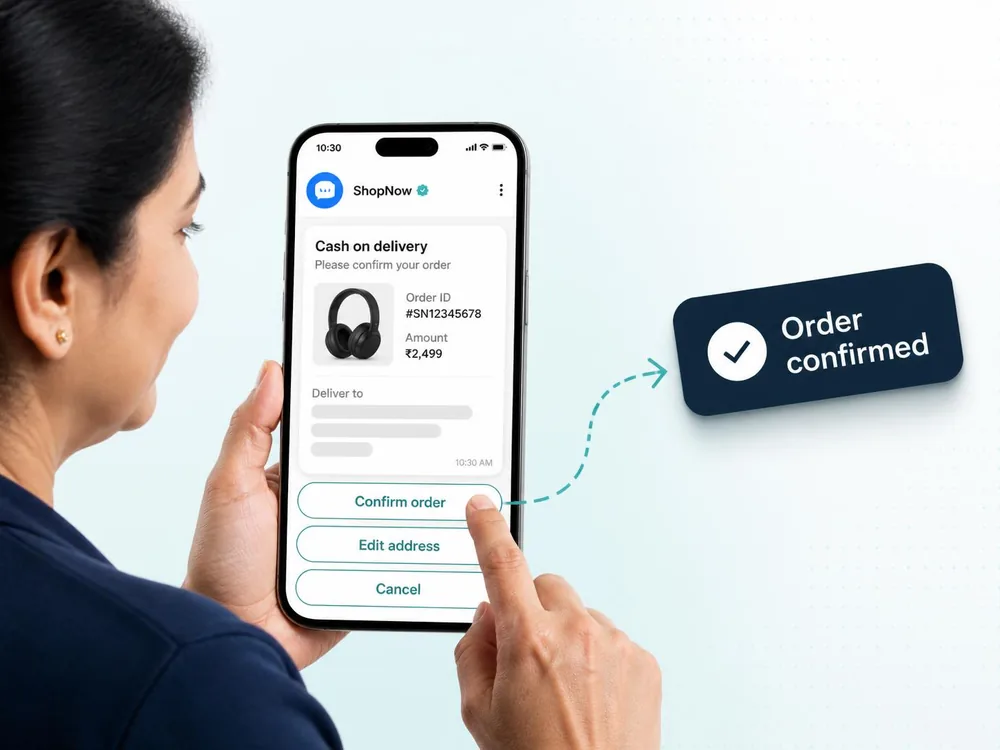
| COD order placed | Order summary and delivery address | Confirm order · Edit address · Cancel | Transactional |
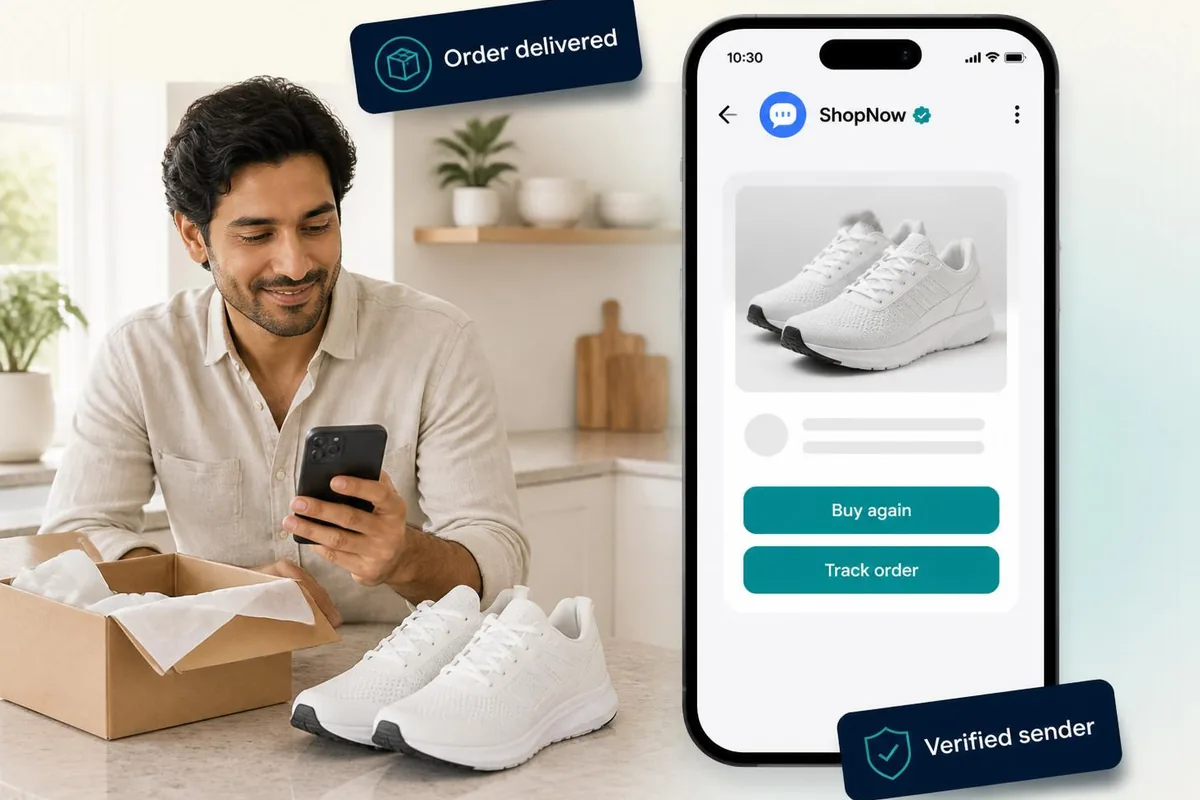
| Shipped | Product image, courier and expected date | Track order | Service |
| Refund processed | Amount and where the money went | View details | Transactional |
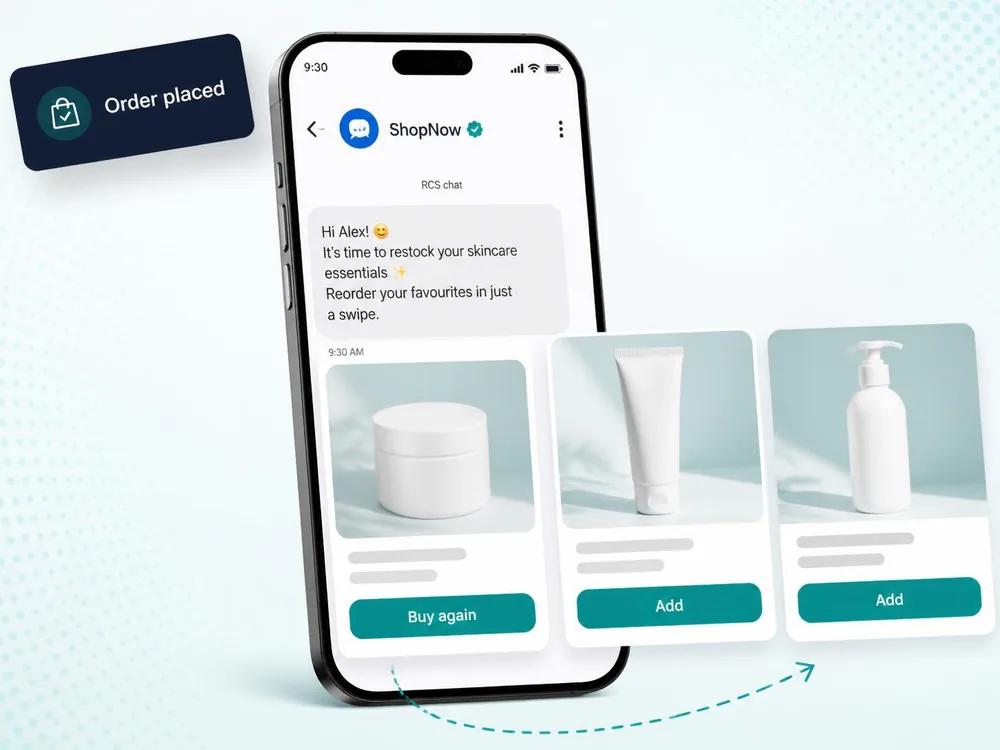
| Time to reorder | Last order, ready to repeat | Buy again · Change quantity | Promotional |
The last column is how the SMS version is classed under TRAI's DLT rules. Mixing an offer into a service message makes the whole message promotional.
Card examples
Three cards that recover revenue.
Cart recovery with the actual cart
The reminder shows what was left behind: the product photograph, size and colour, with "Return to cart" opening the cart already filled. A carousel handles carts with several items, one card each.
- Sent only to shoppers who agreed to reminders
- One reminder, not a sequence that nags
- Taps reported, so you know which products pull people back
Cash on delivery, confirmed before dispatch
The confirmation card arrives straight after checkout with a thumbnail of what was ordered, so the shopper recognises the order before answering. "Confirm order", "Edit address" and "Cancel" sit under it as suggested replies, and each tap returns a coded answer (postback data) that your order system reads, so doubtful orders are held before they leave the warehouse.
- Your verified store name heads the card, so the request does not read like a stranger's text
- "Edit address" fixes a wrong pincode before the parcel ships
- Unanswered orders can be held for an automated confirmation call
Reorders on the product's own clock
Consumables run out on a schedule. A replenishment card timed to how long the product usually lasts, whether coffee, pet food or water filters, offers "Buy again" with the last order already filled in.
- Timing set per product, not per campaign
- A carousel of items often bought alongside it
- Sent as promotional, and only to shoppers who agreed to hear from you; a STOP reply ends them
Card design rules
How do the dark-pattern rules apply to an RCS card?
They apply to every part of the card a shopper sees or taps: the image, the carousel, the price line and the suggested replies. The Central Consumer Protection Authority's Guidelines for Prevention and Regulation of Dark Patterns, 2023 list thirteen patterns, and four of them can hide inside a shopping card.
False urgency in the image
A countdown or "only 2 left" baked into a card image or GIF cannot change once the card is sent. It has to match the live sale end or stock level at send time, or stay out of the image.
Basket sneaking in the carousel
The recovery carousel shows only what was in the cart, one card per item. Suggestions go in a separate card the shopper adds from, never into the cart the button reopens.
Drip pricing on the price line
The price line shows the price at checkout, including any delivery or COD charge, or says what it leaves out.
Nagging through suggested replies
One reminder. A "Not now" tap ends the sequence, and Google's RCS for Business policy requires a STOP reply to be honoured across all of a brand's promotional agents.
The Consumer Protection (E-Commerce) Rules, 2020 also require clear return, refund and grievance details. A "Returns policy" button on order cards keeps them one tap away.
After delivery
Post-purchase messages that bring the second order.
For stores with shops as well, see messaging for retail; for every channel an online store uses, see messaging for e-commerce.
Rating requests
A one-tap rating card after delivery. A low score goes straight to your support team so the problem gets fixed.
Return pickups, booked by tap
The return card shows the item going back, photographed, with pickup slots as suggested replies. The slot the shopper taps goes straight to your returns system, with no form to fill in.
Members and loyalty
Points balance and member previews for shoppers who joined your programme and asked to hear about it.
Questions
Questions about RCS for e-commerce.
RCS for e-commerce means using Rich Communication Services to reach shoppers with product carousels, cart reminders, order updates and reorder prompts that carry images and buy buttons, inside their default messaging app.
The store's verified name and logo head every message. How RCS works, with sources.
Yes. A card sent straight after checkout asks the shopper to confirm or cancel, and the reply reaches your order system as a structured answer through our API.
Cancelled or unanswered orders can be held before dispatch.
Yes, as a carousel: several product cards side by side, each with a photograph, a short description and its own buttons.
It suits a curated shortlist. The full catalogue stays on your site, one "View all" button away.
Yes. Your store or order system calls our REST API on events such as checkout, dispatch and delivery, and delivery, read and reply events come back by webhook. The API documentation lists the endpoints.
Salesforce, HubSpot, Zoho and Freshdesk are supported, CleverTap and MoEngage connect for journeys (see the MoEngage setup guide), and any other system connects through the REST API.
Shoppers whose phones cannot receive RCS. Google Messages reaches roughly 95% of Android handsets in India, and Apple added RCS in iOS 18, so iPhone reach is growing but not yet universal; whether a given card arrives as RCS depends on the handset, its software and the network. The sources are on our RCS explainer.
They get the SMS version, with a whitelisted link in place of the buttons.
You pay for each message delivered, and promotional cards such as offers and reorders are billed differently from utility updates such as dispatch notices. Opening an account and using the platform carry no fee, and volume senders can ask for custom rates.
The figures are on the pricing page.
Bring back the customers you already paid for.
Tell us your order volume and where shoppers drop off. We will show you the cart, COD and reorder cards built in your branding.