RCS for banking & finance
RCS in banking: alerts a customer can verify on sight.
In banking, RCS stands for Rich Communication Services: the successor to SMS that puts a bank's verified name and logo on its alerts, statement notices and reminders, with buttons the customer can tap. UDO runs it for banks, NBFCs and fintechs, with SMS fallback for any handset that cannot receive it.
Google-verified sender · SMS fallback on every alert · 99.9% platform uptime
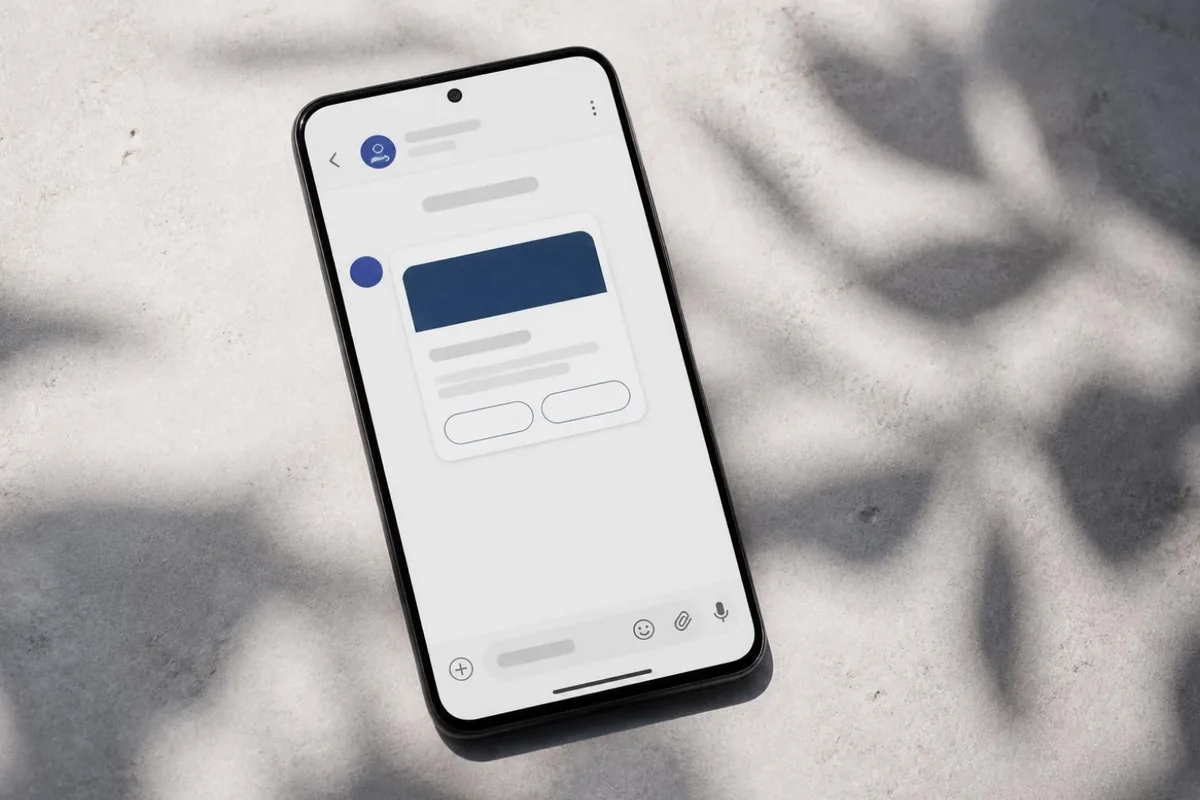
The full form
What does RCS stand for in banking?
In bank messaging, RCS stands for Rich Communication Services, the GSMA standard that replaces SMS inside the phone's own messaging app. If you met the letters in co-operative banking instead, they usually mean the Registrar of Co-operative Societies, which is a different thing entirely.
| Where you saw it | What RCS means | What it covers |
|---|---|---|
| A message from your bank with its logo and buttons | Rich Communication Services | Verified business messaging in the default messaging app. This page. |
| The "RCS chats" setting in Google Messages | Rich Communication Services | The same standard, used between people rather than from a business. |
| Co-operative bank registration, audits or board elections | Registrar of Co-operative Societies | The state official who registers co-operative societies, co-operative banks among them. RBI regulates their banking business. |
Everything below is about the first meaning. For the standard itself, read what RCS is, with GSMA, Google and Apple sources.
The trust problem
Why do banks send RCS instead of plain SMS?
Banks send RCS because a plain SMS shows only a short sender code that few customers can check, and fraudsters copy bank alerts word for word. An RCS message arrives under a name and logo Google has verified against the bank, so the genuine alert looks different from the forgery.
Three things a forged text cannot copy
- The sender line. Your registered brand name, logo and colour, approved before the first send rather than typed into each message.
- Buttons instead of pasted links. "Pay now" or "View statement" opens your own site, so there is no shortened URL for a careful customer to doubt.
- A read receipt. You know the fraud warning was opened, not only that it was delivered.
RBI has reserved the bank.in domain for Indian banks. Point every button at your bank.in address and the verified name on the thread and the link behind the button tell the customer the same thing.
How RCS Business Messaging works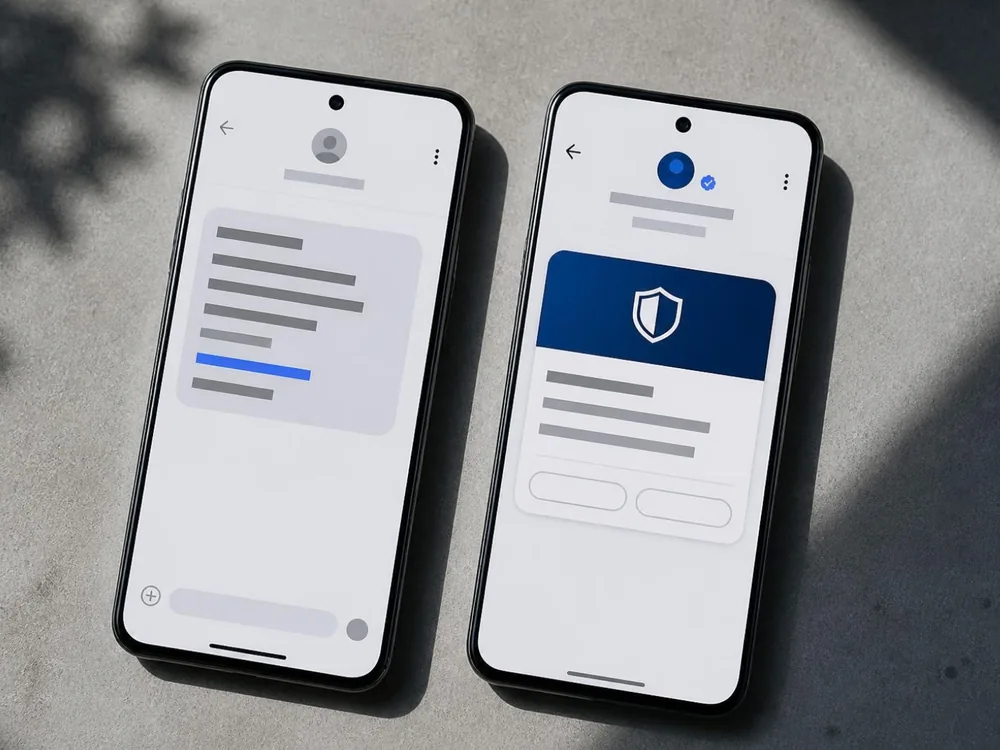
Card examples
Four banking messages, rebuilt as RCS cards.
Each starts as an alert your systems already send. The card adds context and turns the next step into a tap.
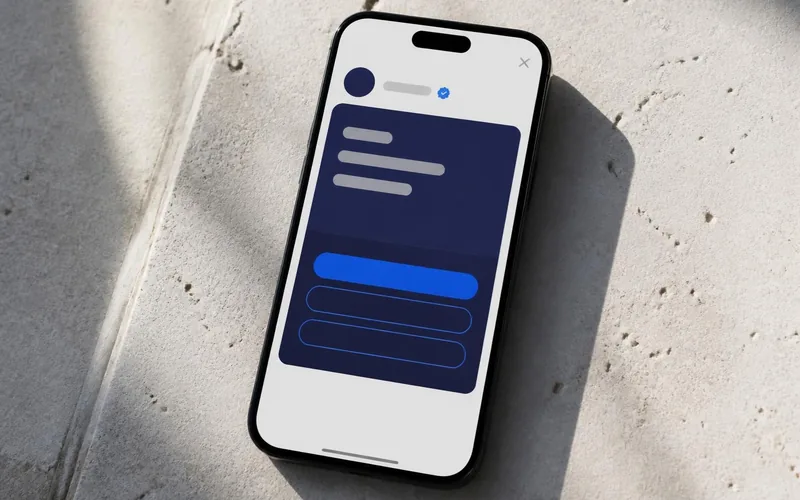
Debit and credit alerts
Amount, merchant, masked account and balance on one card. "Not me" starts your unauthorised-transaction report, and "Call us" dials your official helpline rather than a number a fraudster supplied.
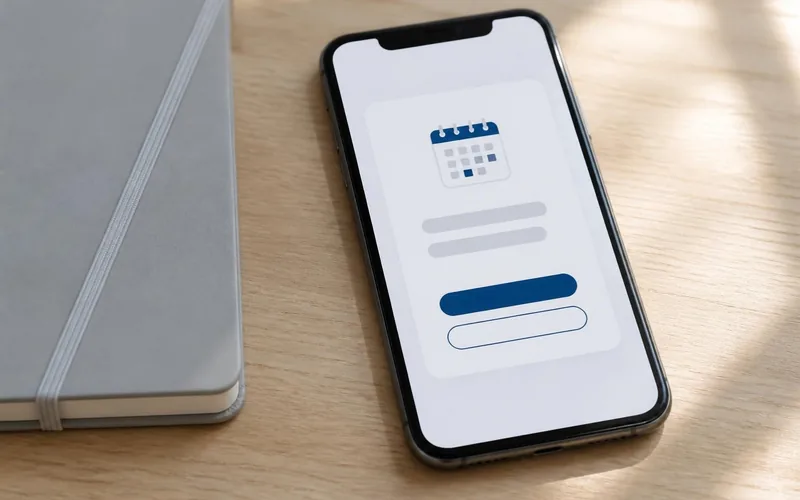
EMI and card-payment reminders
The due date and amount up top, "Pay now" to your payment page, and "Remind me" to drop the date into the customer's calendar. A reminder that gets paid is one fewer collection call.
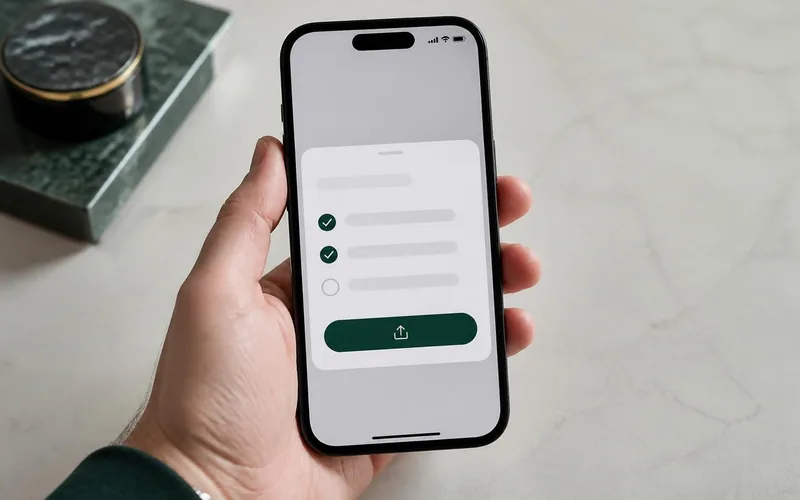
Loan application status
Approved, under review or waiting on a document, with the missing item named and an upload button beside it. Applicants stop ringing the branch to ask where things stand.
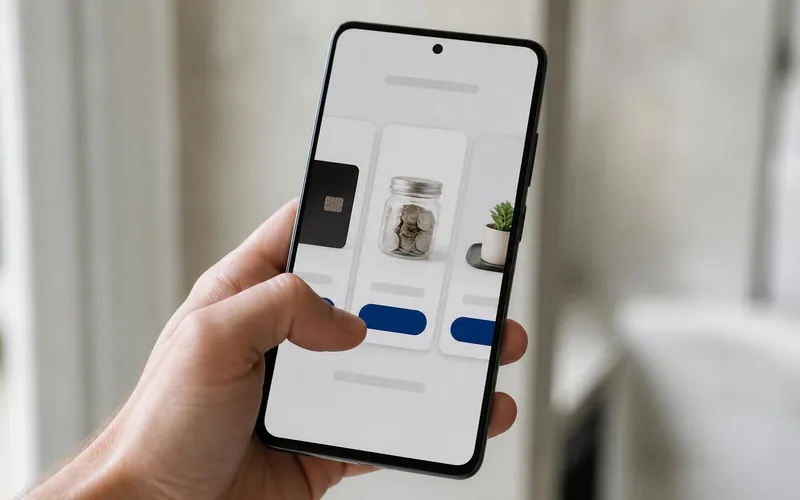
Offers to customers who opted in
A carousel of cards, deposits or accounts, each with its own "Apply" button. Offers go out from a promotional sender, kept apart from the alerts customers depend on.
Regulation
Which RBI and TRAI rules apply to RCS in banking?
Three sets of rules apply: RBI's rules on transaction alerts and on recovery conduct, TRAI's DLT rules for every SMS fallback, and Google's verification of the RCS sender itself. RCS adds a channel on top of them; it does not replace the SMS alert RBI expects.
RBI: alerts and reporting
RBI's rules on customer liability in unauthorised electronic banking transactions require banks to send an SMS alert for every electronic banking transaction, and to let the customer object simply by replying to it. From 1 January 2027 the SMS is mandatory above 500 rupees and must include a number the customer can text to object. An RCS card can carry that "Not me" as a button, beside the SMS rather than instead of it.
TRAI: headers and templates
When an RCS message falls back, it travels as an ordinary commercial SMS: a DLT-registered header with its -T, -S or -P suffix, a registered template, and only links on your whitelist.
Google: one declared purpose
Google verifies the business behind every RCS sender and registers it for one declared use: one-time passwords, transactional alerts or promotions. Google's combined multi-use type is not available in India, so codes, alerts and offers each go from their own sender. In India a business can start an RCS conversation only between 7 AM and 10 PM, and a new promotional sender can open a conversation with the same customer twice in any 28 days, rising to four or eight times as its reputation improves. Replies to a customer's own messages are not capped.
RBI's directions on recovery agents bar intimidation, harassment and the sending of inappropriate messages on mobile or social media. Keep overdue reminders factual: the amount, the date, how to pay and whom to contact. Your compliance team decides which messages must stay on SMS, and we build the RCS layer around that decision.
Sources: RBI, Commercial Banks – Responsible Business Conduct Directions, 2025 (28 November 2025), which now hold its customer-liability and recovery-agent rules, with the Third Amendment Directions, 2026 on transaction alerts and the Fourth Amendment Directions, 2026 on recovery, both in force from 1 January 2027; RBI, Migration to the .bank.in domain (22 April 2025); TRAI, TCCCPR 2018 (PDF, 5.7 MB) and its Second Amendment, 2025 (PDF, 1.8 MB); Google, RCS agent use cases and business rules. Last verified .
Across financial services
Who in finance sends RCS, and what they send.
Insurers have their own page: messaging for insurance. For every channel a bank runs, see messaging for banking and finance.
Retail banks
Transaction alerts, statement-ready notices and card controls, each under the bank's verified identity.
Co-operative banks
Deposit-maturity and locker-renewal notices under a name members already know from the branch.
NBFCs and lenders
Application status, a "View sanction letter" button, EMI schedules and pre-due reminders.
Fintech and payment apps
Login codes, payment confirmations and KYC nudges, with SMS fallback for older handsets.
Getting started
From approval to the first alert, in five steps.
Brand verification depends on Google's review rather than on your team or ours, which is why it is filed before anything else.
Declare the use
Codes, alerts or offers, with a separate sender for each.
Brand verification
Google checks the business behind the name. This step waits on Google.
Sender profile
Logo, display name, colour and helpline registered.
Cards and fallback
We build the cards; DLT templates cover the SMS version.
Connect and send
Your core banking system triggers sends over the REST API.
Questions
Frequently asked.
RCS stands for Rich Communication Services when the subject is bank messaging: verified, branded messages with buttons, delivered to the phone's own messaging app.
In co-operative banking the same letters can mean the Registrar of Co-operative Societies, the state authority that registers co-operative banks.
Yes, and it is harder to impersonate than SMS because the sender is verified. Google checks the business before approving the name and logo the customer sees, so another sender cannot borrow your verified name and logo.
It is not a reason to put more in the message. Keep full account numbers, PINs and passwords out of every alert, exactly as you would on SMS.
No. RBI expects banks to send SMS alerts for electronic transactions, so RCS usually runs alongside them rather than in their place.
For messages your compliance team is content to send on RCS first, any customer who cannot receive it gets the SMS automatically.
Customers whose handsets cannot receive RCS get the SMS version instead. Google Messages brings RCS to roughly 95% of Android phones in India; on iPhone, support began with iOS 18 and is not yet universal.
The fallback uses your DLT-registered header and template, so nobody misses an alert.
Yes, through our REST API: your core banking, card or loan system calls it when an event happens, and delivery and read events come back by webhook.
Salesforce, HubSpot, Zoho and Freshdesk connect directly. The API documentation lists the endpoints.
Per delivered message, with promotional and utility messages billed at separate rates. There is no account opening fee and no subscription fee, and high-volume senders get custom rates.
Current rates are on the pricing page.
Judge any RCS Business Messaging provider on five things: Google brand verification handled with you, automatic SMS fallback on your own DLT-registered headers and templates, separate senders for alerts and for offers, delivery and read events returned by webhook, and a REST API your core banking or loan system can call.
UDO's platform covers all five.
A registered business, brand assets for the sender profile, DLT registrations for the SMS fallback, and a decision on which messages run on RCS.
Google's brand verification takes longest, because it waits on Google's review. A named account manager handles the rest with your team.
See your own alerts as RCS cards.
Send us two or three messages your bank sends today. We will show them back as verified RCS cards, with the SMS fallback beside each one.