RCS explained
What is RCS? Rich Communication Services, explained.
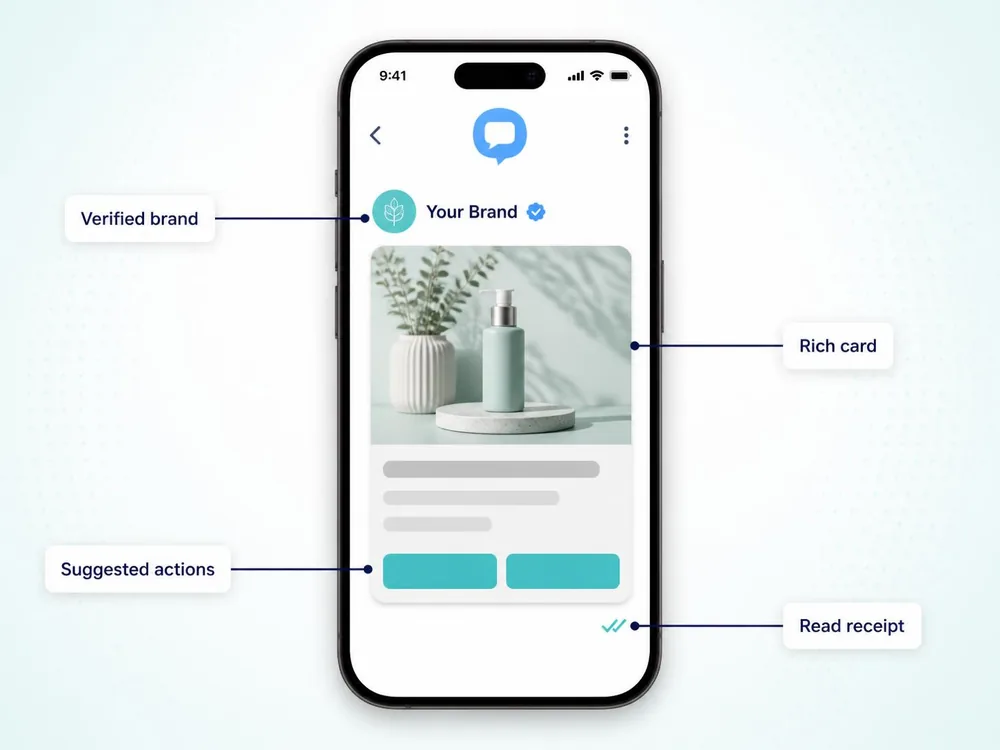
RCS stands for Rich Communication Services: the GSMA messaging standard that replaces SMS inside the phone's own messaging app, adding a verified brand name, images, buttons and read receipts. There is nothing to install, on Android and on iPhones running iOS 18 or later where the carrier supports RCS.
By the Unique Digital Outreach team · Checked against GSMA, Google and Apple sources · Last verified
Start here
RCS in one sentence.
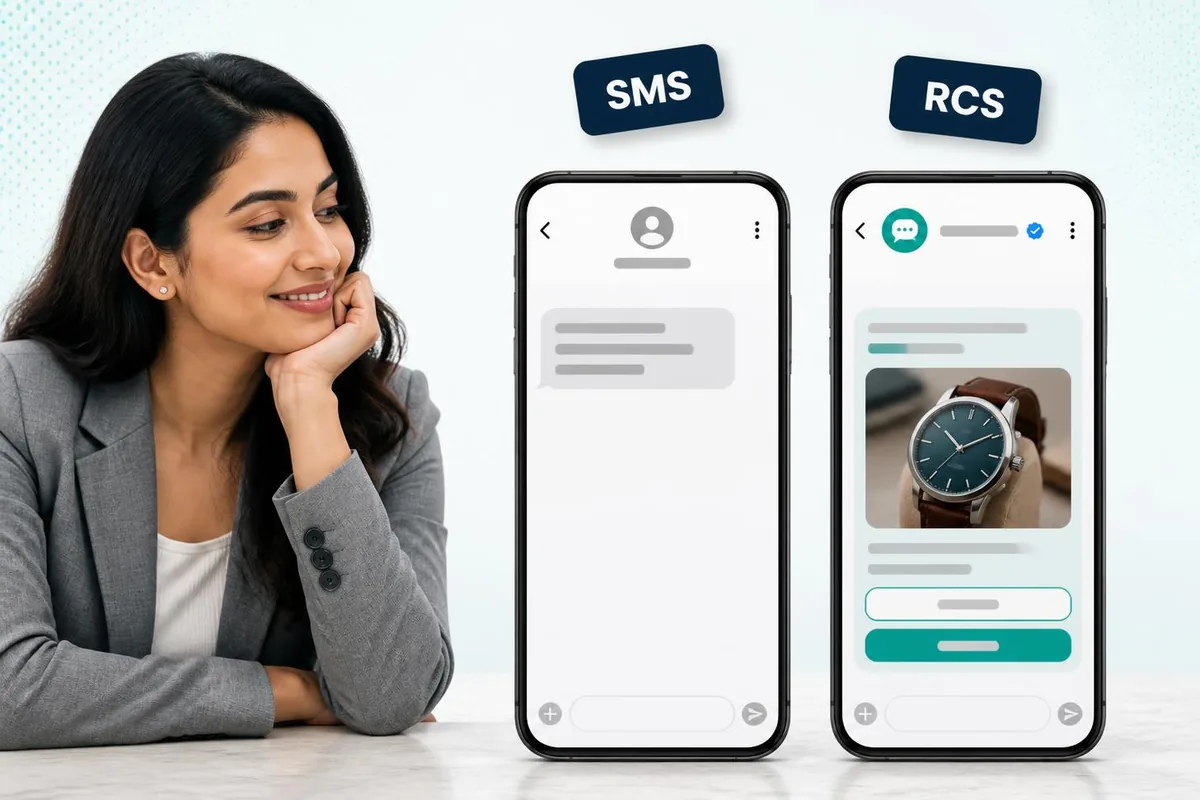
RCS is Rich Communication Services, the GSMA messaging standard that succeeds SMS: it runs inside the phone's default messaging app over mobile data or Wi-Fi, and it lets a business send messages that carry its verified name and logo, images, carousels and tappable buttons, with delivered and read receipts coming back.
What RCS adds to a text message
SMS + a verified sender + rich media + buttons + read receipts = RCS
- Where it arrives: the default messaging app on the phone, the same place SMS arrives, with nothing for the customer to install.
- Who it is from: a registered brand name and logo, verified before sending, instead of an unfamiliar number.
- What it carries: high-resolution images, video, product carousels and tappable buttons.
- What comes back: delivered and read receipts, plus the buttons the customer tapped.
- If it is unsupported: the sending platform sends the same message as an SMS instead, when SMS fallback is set up.
The name
What does RCS stand for?
RCS stands for Rich Communication Services, a messaging standard published by the GSMA, the industry body that represents mobile network operators.
The word doing the work is rich. An SMS carries plain characters with no picture, button or identified sender. RCS is the specification for carrying the rest: images, video, structured cards, suggested replies and a verified brand name.
You will also see it written as RCS chat, RCS messaging or rich content messaging. The version most handsets implement is the GSMA's Universal Profile, so a message behaves the same way across networks and phones.
RCS is a standard, not a company's product. Google does not own it. Networks and handset makers implement a shared specification.
RCS
Rich Communication Services: the GSMA messaging standard that succeeds SMS, carrying a verified sender, rich media and interactive buttons in the default messaging app.
Universal Profile
The GSMA specification most handsets implement, so that an RCS message behaves consistently across different networks and phones.
RCS Business Messaging
The business channel of the standard, in which a verified sender sends rich, interactive messages to customers.
On the handset
What does “RCS chat” mean on your phone?
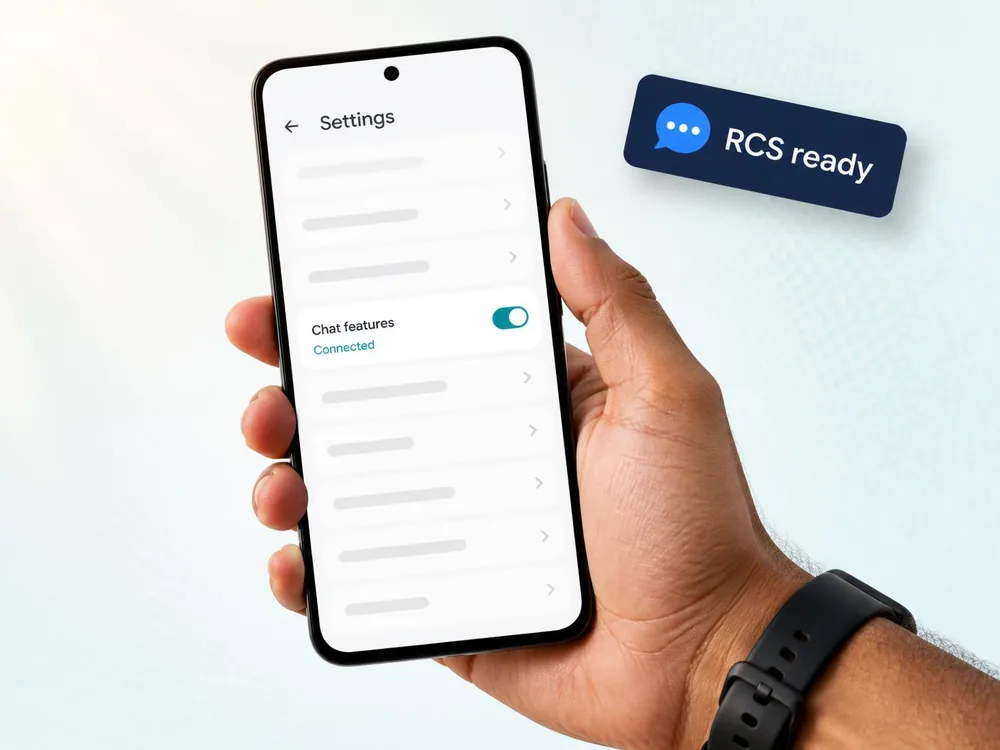
“RCS chat”, or “chat features”, is the setting in your messaging app that switches the richer standard on, so ordinary texts start behaving like a chat app: typing indicators, read receipts, sharper photos and video, and group chats that work properly.
Two things people usually want to know
- It works per conversation. RCS is used when both ends support it. Otherwise the conversation falls back to SMS.
- It is not only Android. Apple added RCS to Messages in iOS 18, so chats between iPhone and Android improved without either person changing app.
For a business, the customer installs nothing and adds no number — your message arrives in the app they already use, looking like something a company sent on purpose.
The difference
What can an RCS message do that an SMS cannot?
An RCS message can show who sent it, carry images and buttons, and report back whether it was read: three things a plain SMS has never been able to do.
The last row decides most rollouts: with SMS fallback set up, adopting RCS keeps your reach, because anything that cannot be delivered as RCS still arrives as a text. For where each channel earns its place, see RCS vs traditional SMS.
The path
How does an RCS message reach a customer?
It travels from your system, through a messaging platform and over the customer's data connection, into the default messaging app on their phone; if RCS is not available there, a sender with SMS fallback set up sends it as an SMS instead.
You send it
From a campaign tool, a CRM, or your own application calling an API.
Your verified sender is attached
Brand name, logo and colour were registered and approved beforehand, not chosen per message.
It travels over data
RCS uses the mobile data or Wi-Fi connection, not the legacy text channel.
The phone draws it
The default messaging app renders the card, the images and the buttons.
Signals come back
Delivered, read, and any button the customer tapped.
If RCS is unavailable on that handset or network and SMS fallback is set up, the text version is sent instead. That fallback is why RCS is straightforward to adopt: you upgrade the messages that can be upgraded and send the rest exactly as before.
In practice
What do businesses use RCS for?
Businesses use RCS for order and delivery updates, bookings and appointments, payment and renewal reminders, product discovery, customer support and verification alerts: messages a customer would otherwise get as plain text, where an image or a button changes what happens next.
Order and delivery updates
A track button instead of a pasted link, and a photo of what is on its way.
Bookings and appointments
Confirm, reschedule or cancel from the message itself, without a phone call.
Payment and renewal reminders
A pay button beside the amount, and a read receipt that tells you it landed.
Product discovery
A carousel the customer swipes through, rather than one link to a page they may never open.
Service and support
Suggested replies that route the conversation without a menu tree.
Verification and alerts
Time-sensitive messages that visibly come from a name the customer recognises.
The common thread is trust. A customer who cannot tell whether a text is genuine tends to ignore it, and that caution is well earned. A verified name and logo answers the doubt before the content is read, which is the part of RCS that matters most and has nothing to do with images or buttons.
Getting access
Who can send RCS messages to customers in India?
Any registered business can send RCS messages to customers in India once its brand is verified and its sender approved, and only to customers who have opted in. Most businesses arrange this through a messaging provider such as UDO rather than registering with Google themselves as a partner on the RCS for Business platform.
What the process involves
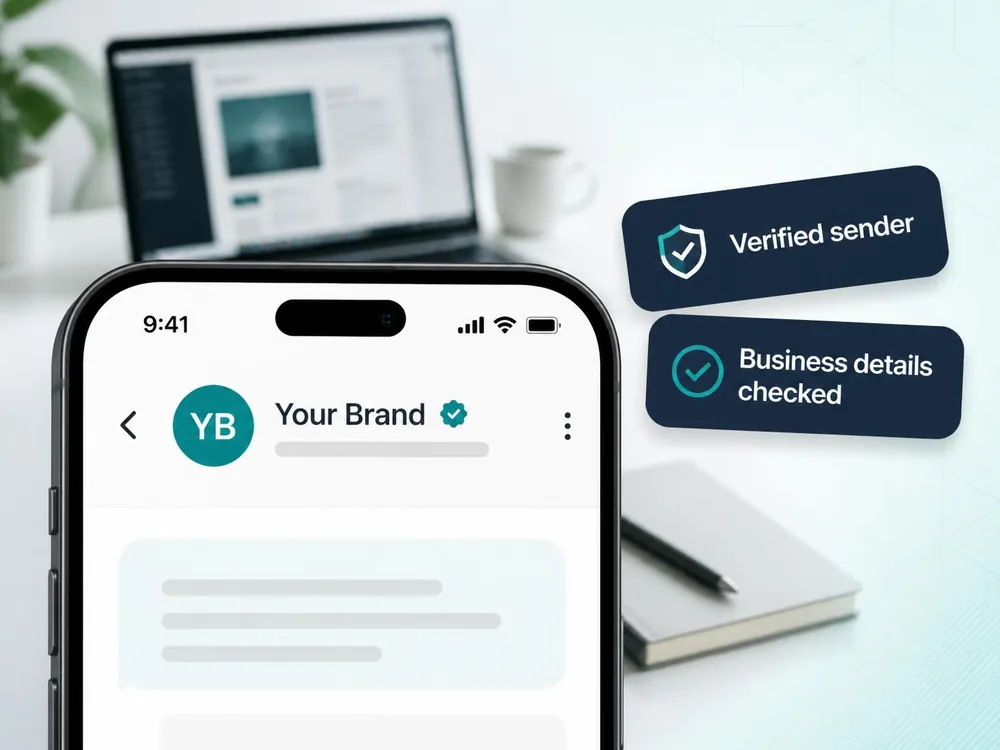
- Brand verification. Your business details are checked before the sender is approved. This is what earns the verified name and logo the customer sees.
- An agent, not a number. Business RCS traffic is sent from a registered sender identity rather than an arbitrary phone number.
- Content that matches what you registered. The use case you are approved for is the use case you send.
- Consent from every recipient. Google's RCS for Business Acceptable Use Policy allows messages only to users who have explicitly opted in, and every sender must act on an opt-out such as a STOP reply.
- Your SMS setup still matters. Because undeliverable RCS is sent as an SMS when fallback is set up, your DLT-registered headers and templates stay part of the picture. A promotional fallback is a promotional SMS, so it reaches non-DND numbers only, between 10 AM and 9 PM by default; a transactional fallback reaches DND numbers at any hour.
Google's brand review is the step that depends on an outside party, so it is worth starting first. The rate card lists the current promotional and utility RCS rates per delivered message.
Working with us
How does UDO set up RCS for your business?
UDO handles sender registration and verification, builds the message formats you need, and runs RCS business messaging beside the channels you already use, on one platform with one set of reporting.
Registration handled
Brand verification and sender approval are managed end to end, so the first thing you see is a working sender.
Formats built around your messages
Cards, carousels and buttons designed for what you actually send, not picked from a template gallery.
Fallback configured from the start
RCS where the handset supports it, SMS where it does not, without you running two systems.
One platform for every channel
RCS sits beside bulk SMS, the WhatsApp Business API and outbound voice, with campaigns and reporting in one place.
Your stack, connected
Send from your own application over our REST API.
A named account manager
One person who knows your sender, your templates and your sending patterns, not a ticket queue.
Questions
Frequently asked.
RCS stands for Rich Communication Services. It is a messaging standard published by the GSMA as the successor to SMS, designed to carry images, buttons and a verified sender identity rather than plain text alone.
It means your messaging app can use the richer standard instead of plain SMS. In Google Messages it appears as a setting called RCS chats, and when it is on you get typing indicators, read receipts and better-quality photos in ordinary conversations.
No. They arrive in the same app, which is why they are easily confused, but SMS carries plain text from a number while RCS carries a verified sender, rich media and buttons, and reports back whether the message was read.
No. RCS arrives in the messaging app already on the phone. That is the core difference from chat apps, which reach only customers who have installed them.
Yes, on iPhones running iOS 18 or later whose carrier supports RCS on iPhone. Apple added RCS to Messages in iOS 18 and chooses which carriers offer it, so whether a given message arrives as RCS depends on the handset, its software version and the carrier.
If the sender has set up SMS fallback, which UDO configures as standard, the message is sent as an SMS instead. You lose the images, buttons and read receipt for that recipient. A promotional fallback is a promotional SMS, so it reaches non-DND numbers only, between 10 AM and 9 PM by default; a transactional one reaches DND numbers at any hour.
No. RCS is a GSMA standard that networks and handset makers implement. Google Messages is the most widely used implementation on Android, and Google provides the business messaging platform many senders use, but no single company owns the standard.
Yes, any registered business can, once its brand is verified and its sender approved, and only to customers who have opted in. Most arrange this through a messaging provider rather than registering with Google themselves as a partner on the RCS for Business platform. The verification is what produces the brand name and logo the customer sees on every message.
Yes. RCS supports two-way conversation, including suggested replies the customer can tap. That is a change from most bulk SMS traffic, where the sending header does not accept replies.
RCS is charged per delivered message, with promotional and utility messages priced separately and no setup fee. The current rates are on our pricing page.
Put a verified name on your next message.
Tell us what you send today and to how many people. We will show it to you as an RCS card in your branding, with the SMS fallback set up underneath.